ServicesStump Grinding
Stump Grinding in Casselberry
We grind tree and palm stumps below grade, cut out the surface roots that catch your mower, and backfill the spot so you can lay sod, plant a bed or set pavers. One phone call gets you a free on-site walkthrough and a written estimate.
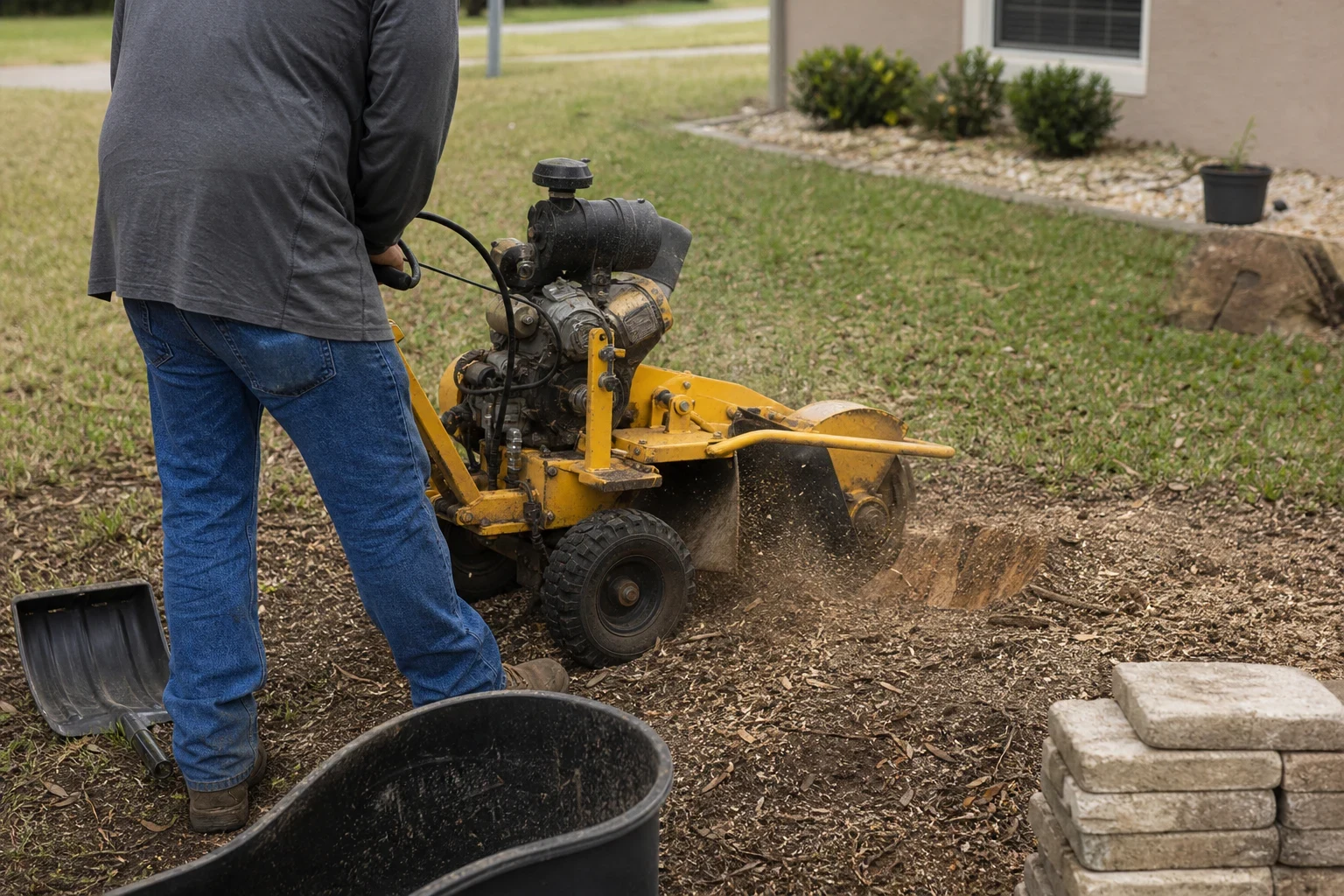
What stump grinding does and when it makes sense
Stump grinding uses a spinning wheel fitted with carbide teeth to chip a stump away in thin passes until the wood sits below the soil line. Unlike pulling a stump out whole, it leaves the deep root mass in the ground to break down slowly, so your lawn, driveway edge and nearby plantings are not torn up by an excavator.
It is the right call when a tree is already down and the stump is in the way of mowing, a new bed or a patio, or when the stump has started to rot. In Central Florida's warm, wet soil, a laurel oak or water oak stump can go soft within a few years, and decaying wood draws subterranean termites and carpenter ants closer to your home.
Casselberry Landscaping has been in business since 2018, and stump work is a regular part of our tree trimming and removal jobs. We also grind old stumps left behind by someone else, whether that was a storm or a previous owner.
What's included in our stump grinding
- Grinding below grade
- We grind most stumps 6 to 10 inches below the surrounding soil. If you plan to plant a new tree nearby or set pavers over the spot, we go deeper so there is room for base material or topsoil.
- Surface root removal
- Exposed roots that run across the lawn get ground out along their length, usually several feet from the stump. That lets the mower deck and new sod sit flat instead of riding over ridges.
- Utility and irrigation marking
- Before the wheel touches soil, we confirm Sunshine 811 has marked buried utility lines. We also flag sprinkler heads and lateral lines ourselves, since residential irrigation often runs only a few inches down.
- Chip cleanup and backfill
- One stump turns into a pile of chips several times its size. We rake them out of the hole, backfill with topsoil and tamp it, then haul the extra or leave some for you as path mulch.
- Palm stumps
- Palms have a fibrous trunk and a dense mat of thin roots rather than a woody taproot. They grind faster but throw stringy debris, so we screen the work area more tightly and clear the fibers by hand.
Signs a stump needs to go
The mower keeps hitting it
Low stumps and root flares chip blades and bend mower decks. If you are trimming around it by hand every week, grinding is cheaper than the repairs.
Soft wood or mushrooms
Crumbly wood, a hollow center or fungus growing from the base means decay is underway. A rotting stump only gets less stable and harder to work around.
Mud tubes or ant trails
Pencil-wide mud tubes on the stump point to subterranean termites, and sawdust piles suggest carpenter ants. Removing the food source near your home is a sensible first step.
Sprouts from the base
Species like sweetgum and camphor push suckers from the stump and roots for years. Grinding the root crown stops most of that regrowth.
A project is coming
A stump blocks new sod, a planting bed or a walkway. Grinding first gives our sod installation and hardscape installation crews a clean, level start.
How a stump grinding job runs
- 1
Walkthrough and estimate
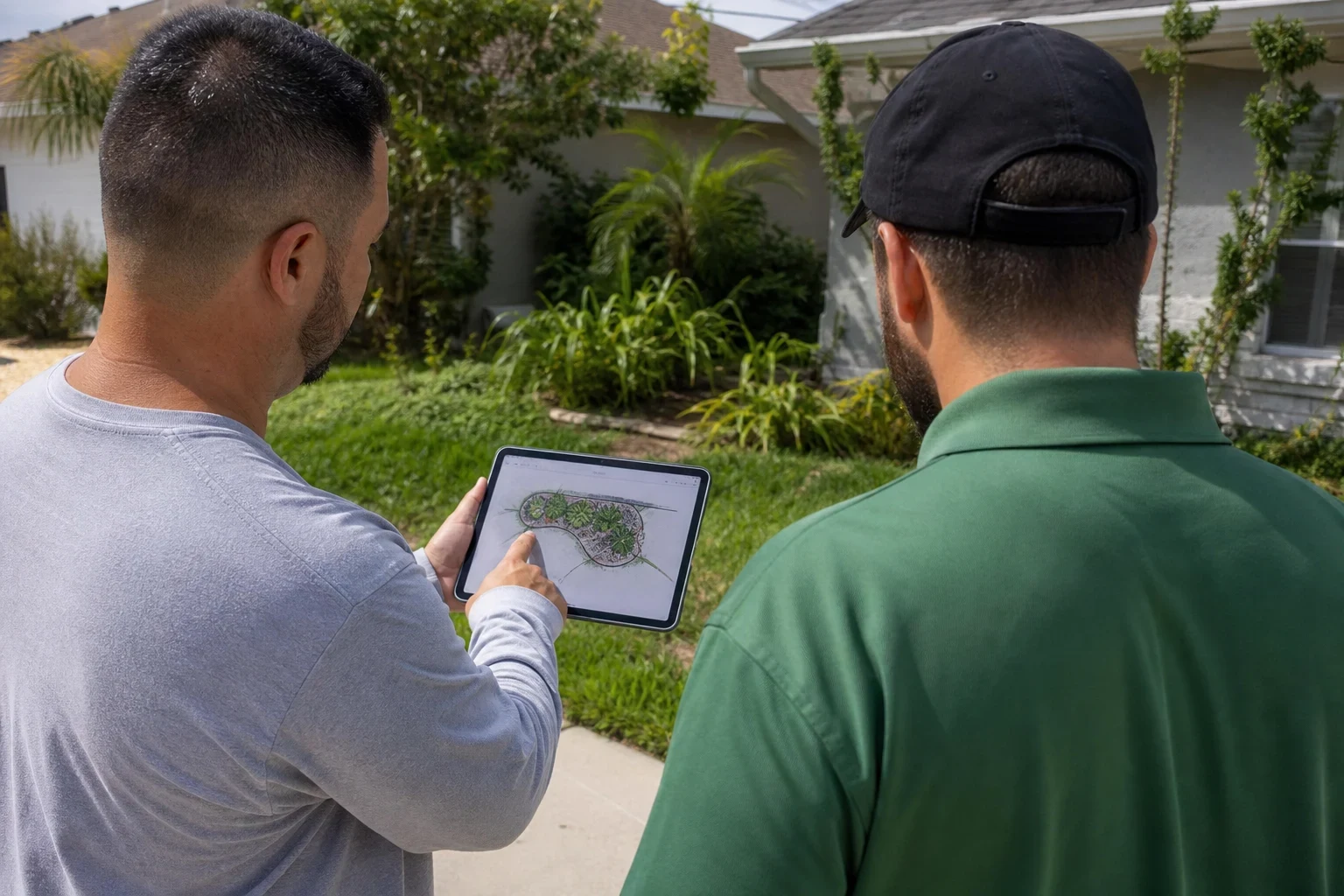
We measure each stump's diameter at ground level, look at root spread, and check gate width and slopes for machine access. You get a written estimate by line item before anything is scheduled.
- 2
Locates and marking
We request utility locates a few business days ahead and mark sprinkler heads and valve boxes on the day. Anything within the grinding zone gets hand-dug to find its depth first.
- 3
Grinding day
A compact grinder fits through most backyard gates. We set up debris screens to keep chips off siding, cars and pool enclosures, then grind the stump and chase the surface roots.
- 4
Backfill and cleanup
Chips come out, topsoil goes in, and the area is raked level. As leftover wood decays the spot may settle an inch or two, so we tell you when to top it off before sodding.
What moves the price of stump grinding
Stump grinding is priced by the stump and the conditions around it, not a flat rate. We look at each one in person so the estimate reflects the actual work. When grinding is one piece of a bigger landscape project, you can spread the cost with financing of up to $100,000, with terms anywhere from two to twelve years and no penalty for paying it off early.
- Diameter and species
- A wider stump takes more passes. Dense hardwoods like live oak grind slower than pine or palm.
- Root flare and surface roots
- Wide buttress roots and long exposed roots add grinding time beyond the stump itself.
- Access
- Narrow gates, steep grades, fences and stumps tight against a slab or foundation slow the machine and may call for hand work.
- Number of stumps
- Several stumps on one visit cost less each than separate trips.
- Chips and backfill
- Hauling all chips and bringing in topsoil adds material and labor compared with leaving chips on site.
Stump grinding questions
Something not covered here? (407) 250-1431
How deep do you grind the stump?
Usually 6 to 10 inches below the soil line, which is enough for sod or a planting bed. We go deeper where you plan pavers or a new tree. Deep roots stay in the ground and break down over time.
Will the spot sink later?
It can settle slightly as remaining wood and roots decay. We backfill with topsoil and tamp it, and we let you know when a light top-off makes sense before laying sod.
Can I plant a new tree in the same place?
We suggest offsetting it a few feet. Decaying wood ties up nitrogen and leaves soft pockets in the soil, which can stress a young tree's roots.
Do I need a permit to grind a stump?
Grinding the stump of a tree that is already down generally does not need a tree permit. If the tree is still standing, removal rules depend on your city or county, and we will explain what applies during the walkthrough.
Can you grind a stump right next to my driveway or fence?
Usually, yes. We grind up to the edge carefully and finish tight spots by hand so the wheel never contacts concrete, posts or footings.
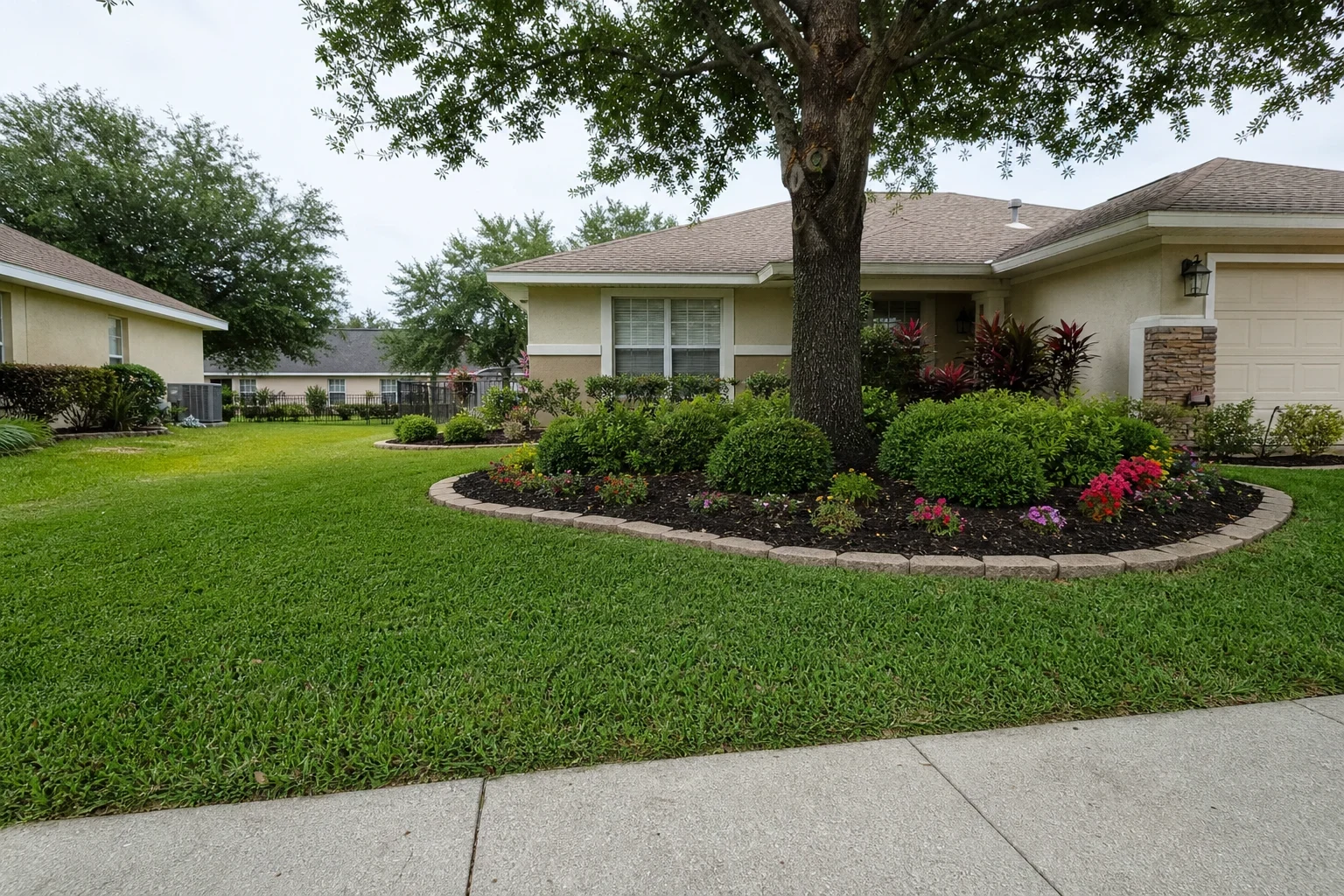
Get that stump out of your lawn
We will look at each stump, the roots around it and the access to your yard, then give you a written estimate on the spot.