ServicesHardscape Installation
Hardscape Installation in Casselberry
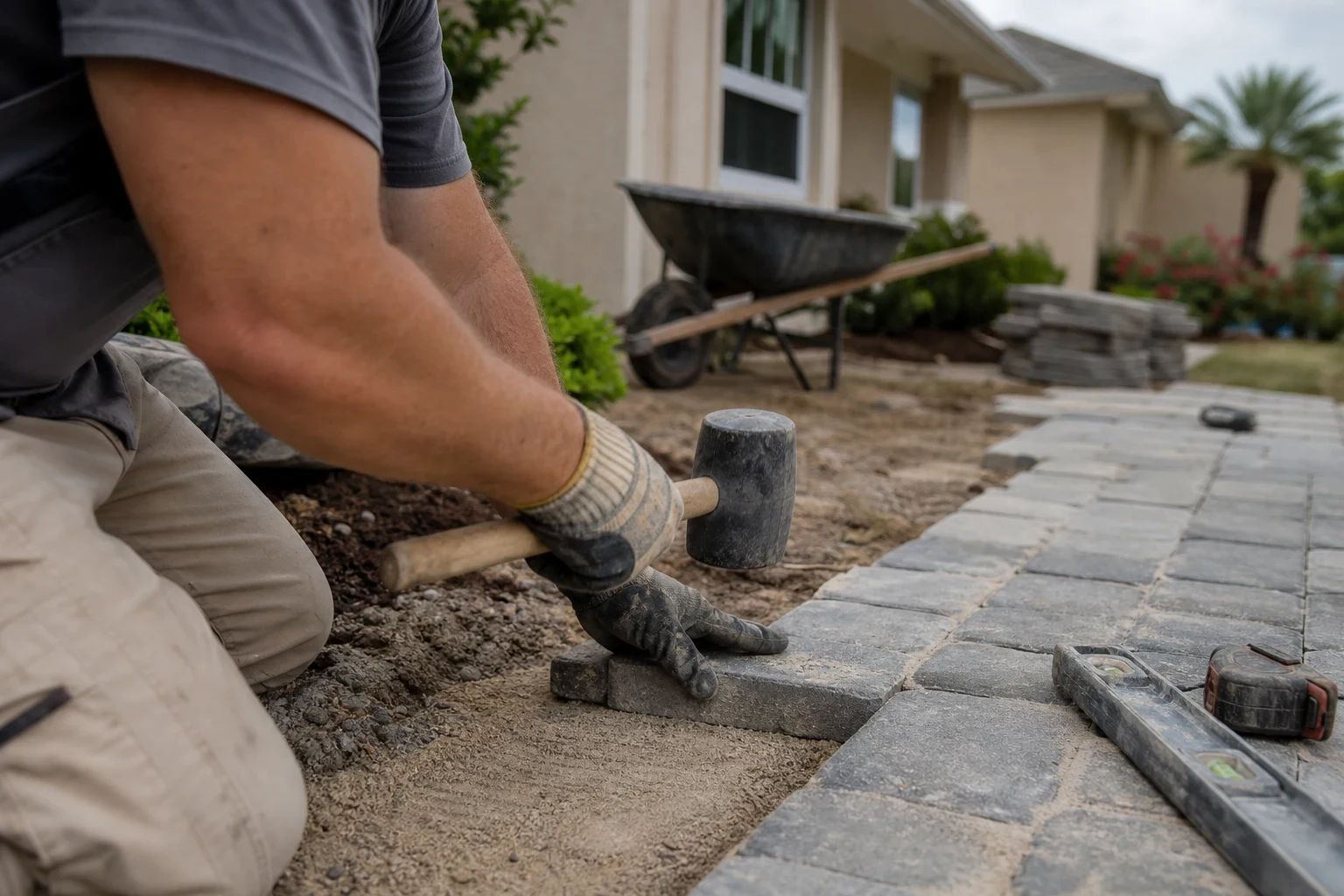
We build paver patios, walkways, seat walls and driveway borders that stay flat and drain properly. That means digging out soft fill, compacting a real base, setting edge restraint and pitching every surface away from your home so water never sits against the slab.
What hardscape covers and when it makes sense
Hardscape is the built part of the yard: pavers, natural stone, concrete block walls, steps and edging. It turns a worn path or a patch of thin grass into a surface you can walk, park or set furniture on without mud or ruts.
Most paver failures we're called to look at come from what's underneath. Central Florida soil is fine sand with pockets of organic muck, and summer storms can drop several inches of rain in an afternoon. A patio set on a thin layer of sand with no edge restraint will shift, sink at the corners and grow weeds in the joints within a few seasons. We build from the subgrade up so the surface you see holds its shape.
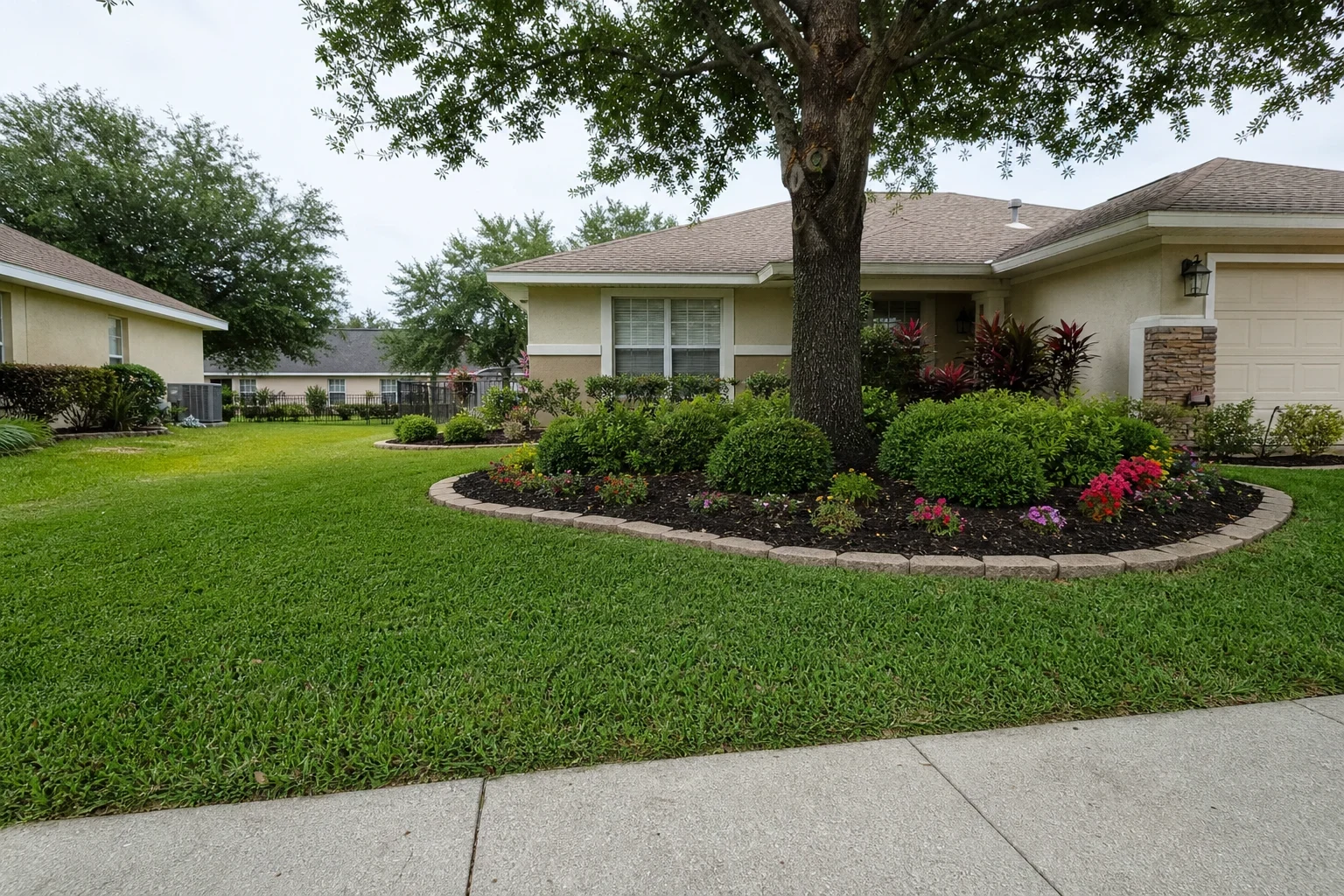
Hardscape is the right call when a spot gets constant foot traffic, when grass won't grow in shade or under a roof drip line, or when you want an outdoor room off the back slider. If you're still deciding on layout and plantings around it, our landscape design work can plan both together.
What a hardscape job includes
- Excavation and subgrade prep
- We dig to the depth the surface needs, deeper for driveway borders than for a garden path, and remove roots and organic soil that would rot and leave voids. The exposed subgrade gets compacted before any base goes in.
- Compacted aggregate base
- Crushed base rock is spread in lifts and run with a plate compactor on each pass. One thick layer compacted once never gets dense all the way through, which is why we do it in stages.
- Bedding, pavers and cuts
- A screeded layer of bedding sand sets the final grade. Pavers go down in the pattern you chose, and edge pieces are cut with a wet saw for clean, tight lines along your home, beds and borders.
- Edge restraint and joint sand
- Spiked plastic or concrete edging locks the perimeter so pavers can't creep outward. Joints are filled with polymeric sand, swept in and misted so it hardens and resists weeds and ants.
- Seat walls, steps and raised beds
- Segmental block walls are set on a compacted leveling pad with gravel backfill behind them, so water drains instead of pushing the wall forward.
Signs your yard is ready for hardscape
A dirt path worn through the grass
If everyone cuts across the same strip of lawn, the grass there won't recover. A walkway puts a hard surface where the traffic already goes.
Pavers sinking or rocking
Low spots and loose pavers mean the base has washed out or was never compacted. Resetting on top of a failed base just repeats the problem, so we pull and rebuild the section.
Water pooling near your foundation
A patio or slab pitched toward the house sends rain to the block wall and slab edge. Rebuilding with proper slope moves that water out to the yard.
Shade or roof-drip areas that stay bare
Under oaks and along eaves, turf thins out no matter how often it's reseeded. Pavers or stone handle those spots without fighting the conditions.
No usable space off the back door
Many older block homes have a small concrete pad and not much else. Extending it with pavers gives you room for a table, a grill or a fire pit.
How the job runs
- 1
Walkthrough and layout
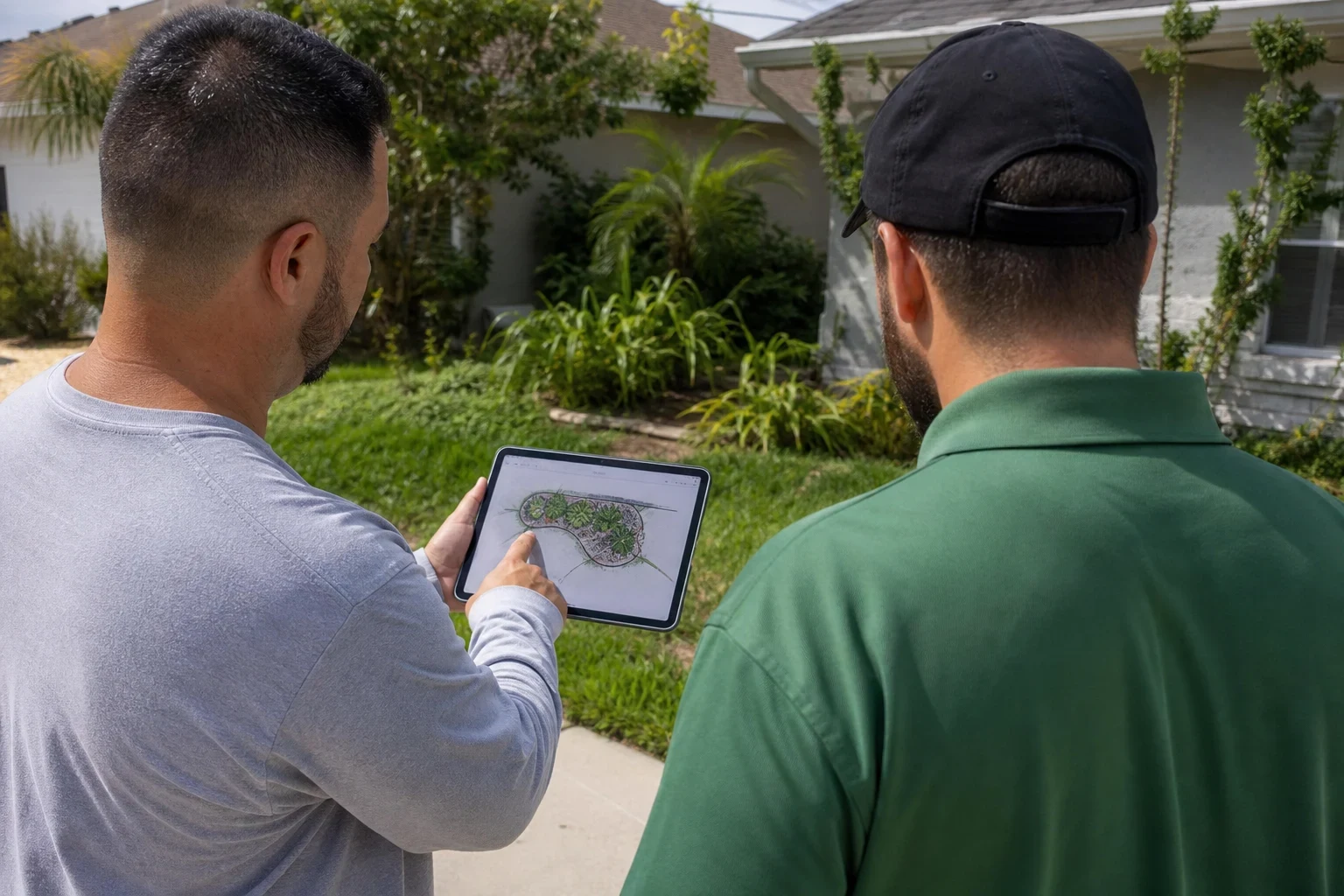
We walk the site with you, measure, check where water flows during rain and look for irrigation lines and utilities. You get a written estimate that lists base depth, materials and edging, not just square footage.
- 2
Permits and utility locates
We call in utility locates before any digging. If the work needs a permit, such as a driveway apron that touches the city right-of-way, we tell you up front and handle the application.
- 3
Excavation and base
Day one is usually digging, hauling spoil and compacting base. Irrigation heads in the way are capped or relocated so your system still covers the lawn afterward.
- 4
Laying and finishing
Pavers are set, cut, edged and sanded. We compact the finished surface to seat the pavers, then sweep, blow off debris and leave the work area clean.
What moves the price
Hardscape pricing depends far more on what's under the surface than on the pavers themselves. Your estimate breaks out excavation, base, materials and labor so you can see where the money goes. If you'd rather spread a bigger build over time, financing is available up to $100,000, with terms anywhere from 2 to 12 years and no penalty for paying it off early.
- Size and shape
- Square footage sets the base cost, but curves and many corners add cutting time and waste compared with a simple rectangle.
- Soil and base depth
- Pockets of muck or buried construction debris mean more digging and more base rock. Driveway areas need a thicker base than walkways.
- Material choice
- Standard concrete pavers, travertine and natural stone differ in cost per square foot and in how much cutting they need.
- Access
- A side yard too narrow for a skid steer means base and pavers get moved by hand, which takes longer.
- Walls, steps and grade changes
- Retaining or seat walls, steps and any regrading for drainage add materials and labor beyond a flat surface.
Hardscape questions we hear
Something not covered here? (407) 250-1431
Why do some paver patios sink and others don't?
Almost always it's the base. Pavers set on loose sand without a compacted aggregate layer and edge restraint will settle wherever water moves through. We compact the subgrade and the base in lifts, which is what keeps the surface level.
Will heavy summer rain wash out the joints?
Polymeric sand binds once it's misted and cured, so it holds up far better than plain sand in hard rain. We slope every surface so water runs off rather than soaking through the joints.
Do I need a permit for a paver patio?
Many backyard patios don't, but driveway aprons, work near the right-of-way and some walls can. We check what your project needs during the estimate and pull the permit when one is required.
What happens to my sprinklers?
We mark heads and lines before digging. Anything in the paver footprint is capped or moved, and we can adjust coverage through our irrigation service so the new edges don't dry out.
How long have you been doing this work?
We've been in business since 2018, building and repairing hardscape alongside our lawn and landscape work around Casselberry and nearby towns like Winter Springs and Longwood.
Get a patio that stays flat
We'll come out, measure, check your drainage and give you a written estimate at no cost. You'll know exactly what's under the pavers before we start.