ServicesLawn Care
Lawn Care in Casselberry
We mow, feed and watch St. Augustine, Bahia and Zoysia lawns at the height and timing each grass needs. We also catch chinch bugs, fungus and dry spots before they spread. It starts with a free walk around your yard and a clear plan for what it needs.
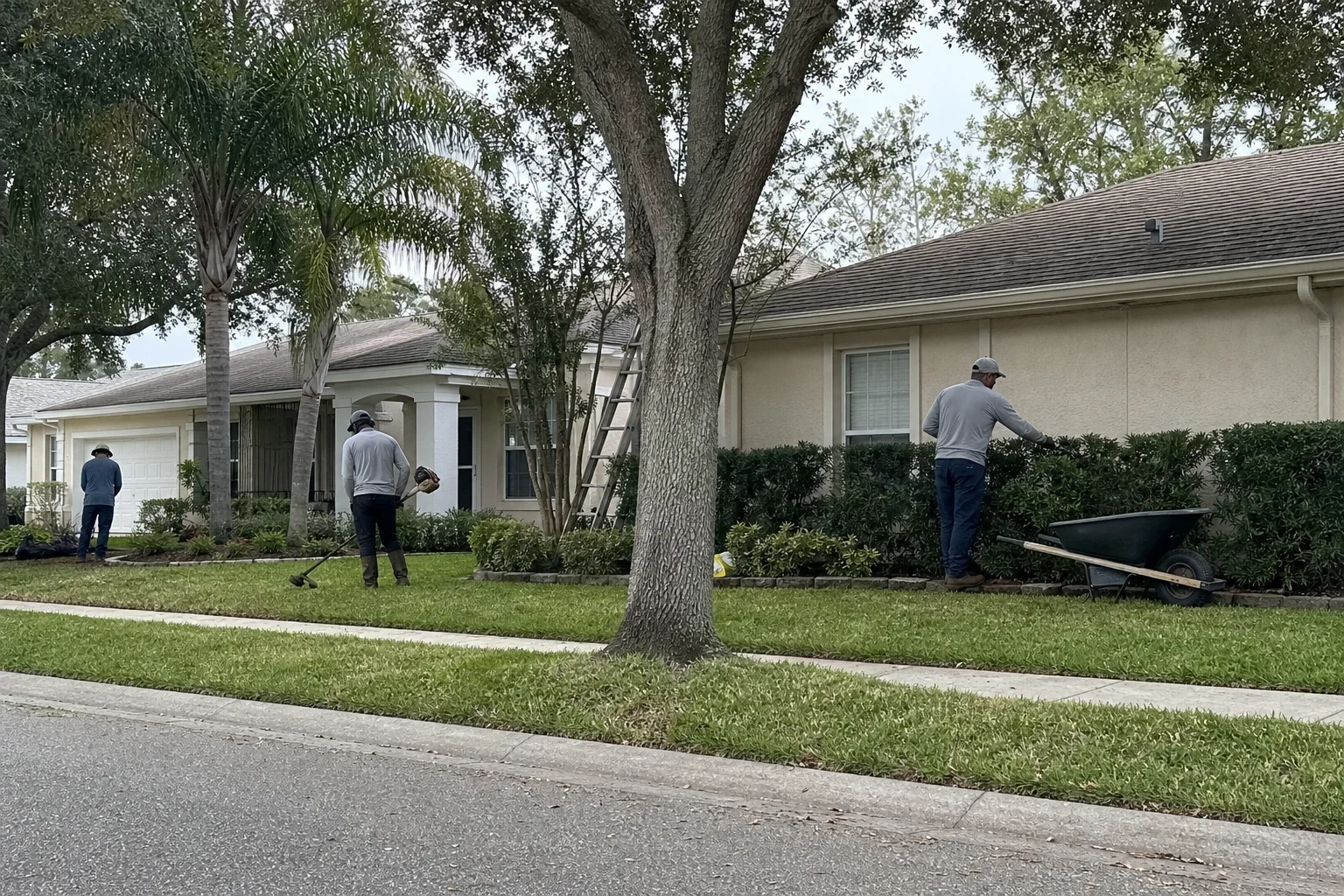
Lawn care built around the grass you actually have
Most lawns in our area are St. Augustinegrass, often the Floratam variety, with Bahia and Zoysia mixed in. Each one wants a different mowing height, a different feeding schedule and different pest checks. Cut St. Augustine too short and it thins, and weeds move into the bare spots. Feed Bahia like St. Augustine and you mostly grow seed heads.
Our sandy soil drains fast and holds few nutrients, so a lawn here depends on steady, light care. One heavy treatment twice a year does little. We've been in business since 2018, and our lawn care is a routine visit: mow at the right height, edge, blow off hard surfaces, and look closely at the turf each time so small problems stay small.
What a lawn care visit includes
- Mowing at the right height
- St. Augustine stays at 3.5 to 4 inches, and Bahia and Zoysia get the heights that suit them. Taller blades shade the soil, cut down on weeds and hold moisture longer between waterings. We keep blades sharp so the leaf tips are cut cleanly instead of torn and browned.
- Edging and string trimming
- We edge along driveways, walks and bed borders, and trim around fences, trees and AC pads. Clippings get blown off concrete and out of the street so they don't wash into storm drains.
- Fertilizer on a schedule
- We use slow-release nitrogen matched to the season. Florida's fertilizer rules and local ordinances limit when nitrogen and phosphorus can go down, and we follow the rules that apply at your address.
- Weed and pest checks
- Each visit we look for chinch bug damage, sod webworm chewing, large patch rings and weeds like dollarweed and sedge. We tell you what we found and treat only what needs treating.
- Irrigation observations
- While we mow we notice dry strips, soggy corners and heads spraying the driveway. We point those out, and if the system needs work our irrigation service can adjust or repair it.
Signs your lawn needs regular care
Yellow patches near the driveway
Hot, dry spots along concrete are where chinch bugs usually start in St. Augustine. The patches spread outward and don't green up after watering.
Brown rings in cool, wet months
Circles of thin, orange-tinged grass from late fall into spring often mean large patch fungus. Too much water and too much nitrogen at that time of year make it worse.
Dollarweed taking over
Dollarweed loves overwatered, short-cut turf. A lot of it usually means the mowing height or the watering schedule needs to change.
Scalped or thin grass
Bare soil showing after a cut means the deck is set too low. The roots weaken, and the lawn handles drought and foot traffic poorly.
Seed heads everywhere
Bahia sends up tall seed stalks in summer. Mowing on a steady schedule keeps the lawn even and stops it from looking ragged between visits.
How we start and run your lawn care
- 1
Walk the yard with you
We come out, identify your grass type, check the soil, and look for pests, fungus and irrigation trouble. You hear what we see in plain terms.
- 2
Set a plan and a schedule
We give you a written estimate covering the mowing frequency, which shifts with the growing season, plus any feeding or treatments the lawn needs.
- 3
Routine visits
Each visit covers mowing, edging, trimming and cleanup of hard surfaces. The crew checks the turf every time, not just when you call with a complaint.
- 4
Adjust as the seasons change
Growth slows in the cooler months and fungus risk goes up, so we change mowing frequency and feeding to match. If a patch fails, we tell you whether it will recover or needs sod installation.
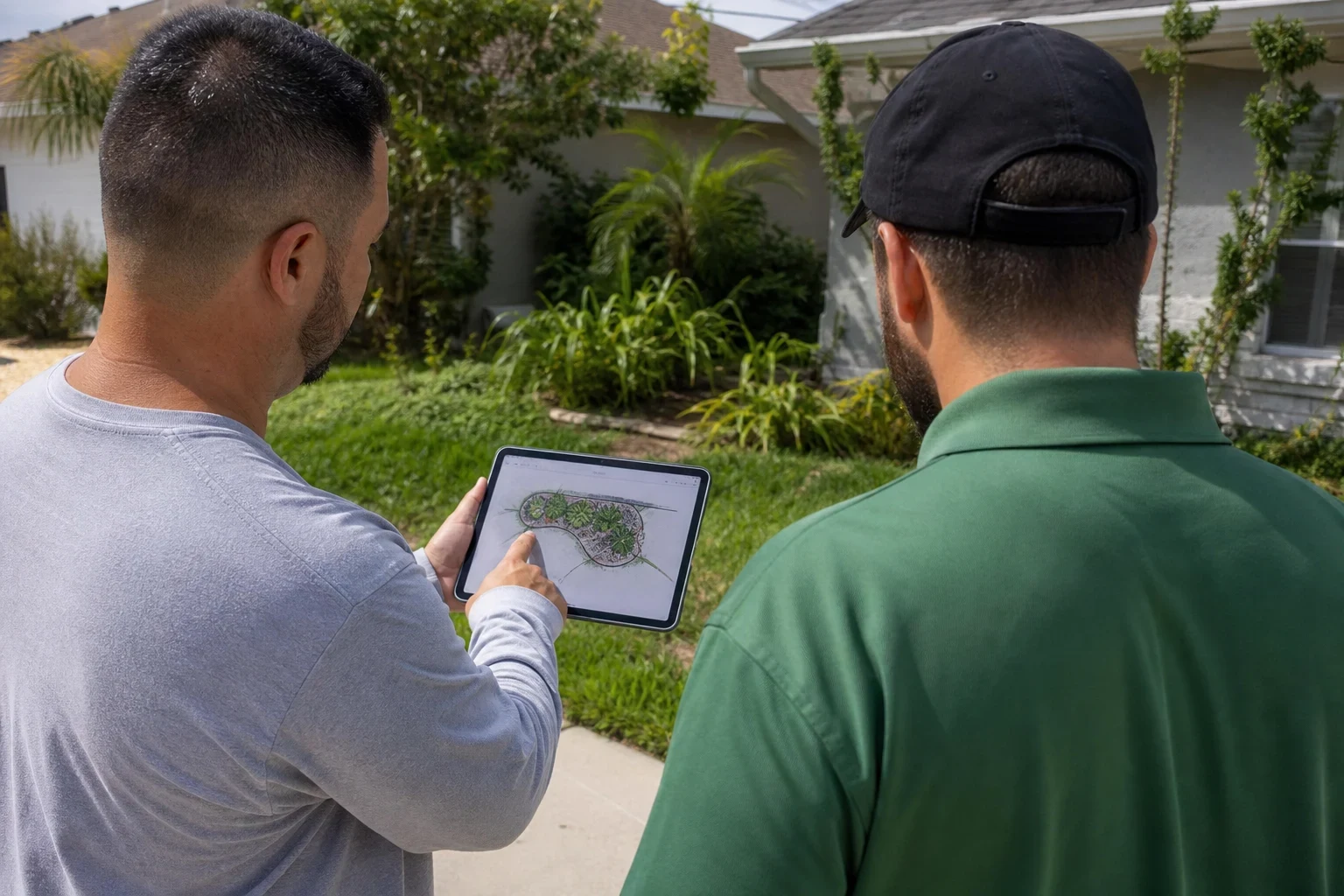
What sets the price of lawn care
Lawn care is priced by the visit or the season, based on what we see during the walkthrough. You get the number in writing before any work starts. These are the things that move it.
- Turf area
- Square footage of grass sets most of the mowing time. Corner lots and deep backyards take longer than the front alone.
- Access and obstacles
- Narrow side gates, steep swales, lots of beds and trees to trim around add hand work beyond the mower.
- Visit frequency
- Weekly cuts in the summer growing season and fewer visits in winter change the yearly total.
- Treatments needed
- A lawn with active chinch bugs or large patch needs more than routine feeding. We only add treatments we can show you a reason for.
Lawn care questions
Something not covered here? (407) 250-1431
How often should my lawn be mowed?
In the summer rainy season, St. Augustine usually needs a cut every week. In the cooler months growth slows and every two weeks is often enough. We set the schedule to the grass, not to a fixed calendar.
Why does my St. Augustine keep dying in the same spots?
Repeat dead spots near pavement are often chinch bugs, which favor hot, dry edges. Spots in low, wet areas point more toward fungus or overwatering. We check the grass at the soil line during the walkthrough to tell which it is.
How much should I water?
Our area falls under St. Johns River Water Management District rules, which limit watering to set days each week, with fewer days in winter. Deep, less frequent watering trains deeper roots. We'll tell you if your zones look too wet or too dry.
Can you save a lawn that's mostly weeds?
Sometimes. If there's enough healthy turf left, correct mowing height, feeding and spot treatment can bring it back over a season. If the grass is mostly gone, replacing it with new sod is usually faster and costs less over time.
Do I need to be home for visits?
No. As long as the crew can get through the gate and pets are inside, we can work while you're away. We let you know if we spot anything you should see.
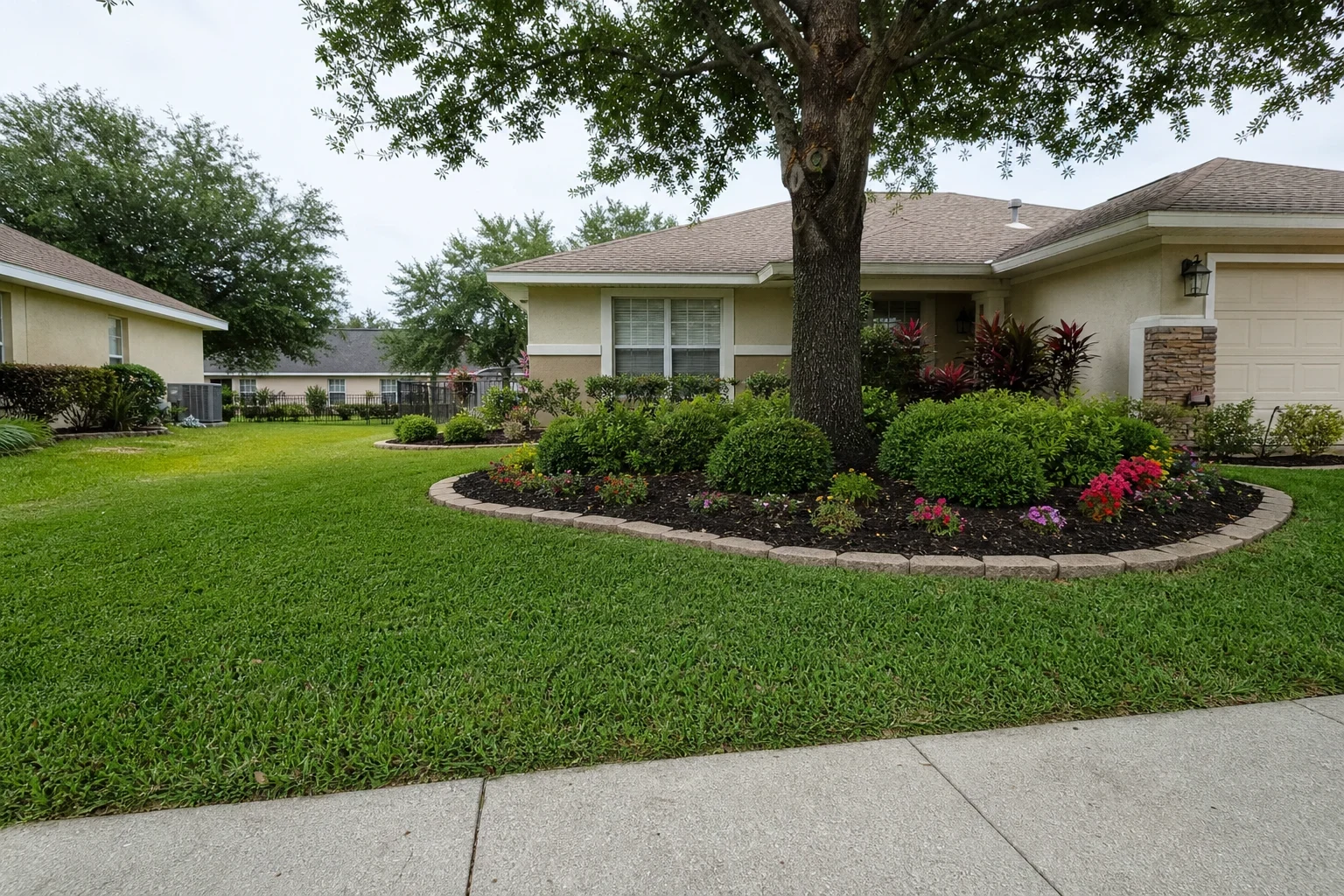
Get a plan for your lawn
We'll walk your yard, name the grass and what's bothering it, and give you a written estimate for regular care. The walkthrough is free.