ServicesIrrigation
Irrigation Repair and Installation in Casselberry
We find out why one zone floods while another browns, then fix the heads, valves, pipe or programming behind it. You get even coverage, a controller set to your allowed watering days, and a clear explanation of what we changed.
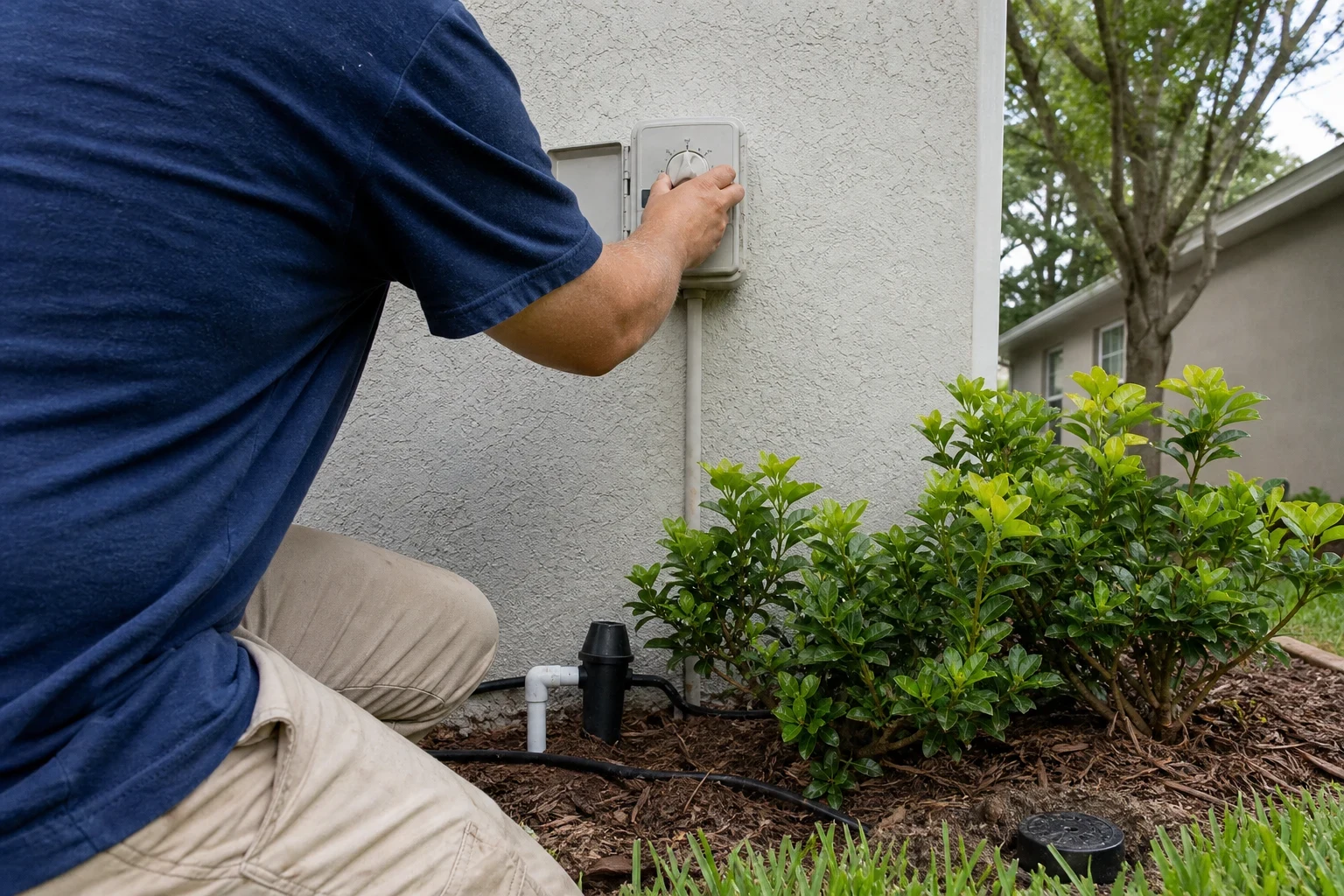
Water where the roots are, not on the driveway
Most sprinkler problems we see are not dramatic breaks. They are slow ones: a rotor knocked out of alignment by a mower, a spray nozzle clogged with sand, a valve diaphragm that no longer seals, or a zone that was laid out for a lawn that is now half shrub bed. Each one wastes water and stresses the plants it should be feeding.
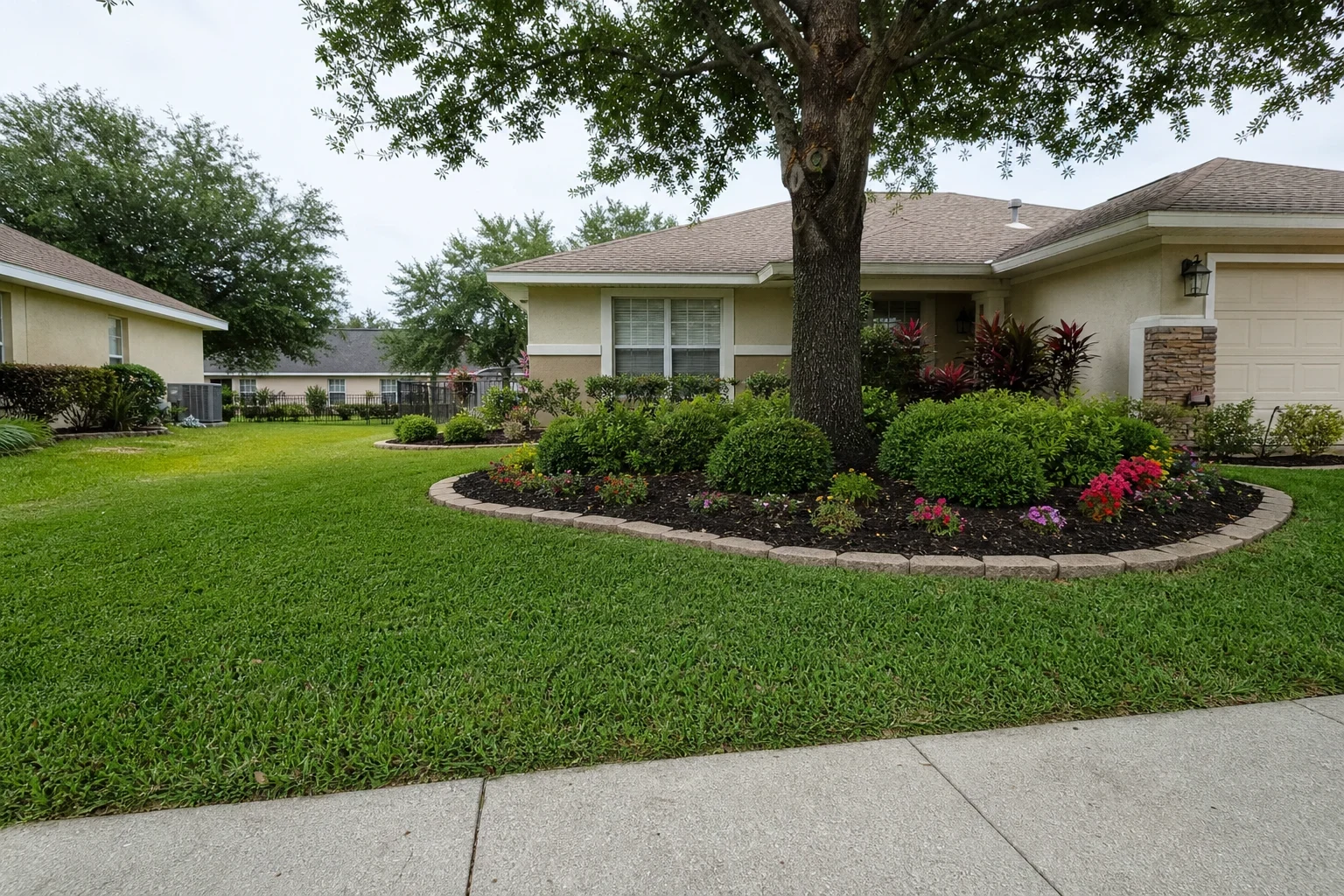
Central Florida soil is mostly sand. It takes water fast and lets it drain past the root zone just as fast, so run time and head spacing matter more here than in clay regions. Too little and St. Augustine thins out in May. Too much and you get dollarweed, fungus and shallow roots that collapse in the first dry spell.
We have worked on residential systems in the area since 2018, from older homes with a single valve manifold to newer builds with smart controllers. The goal is the same on each: matched heads, correct pressure and a schedule that follows the water management district rules.
What our irrigation work covers
Zone-by-zone system check
We run every zone and watch it. We note heads that are tilted, sunk, blocked by plants or spraying the wrong direction, and we check for misting that signals high pressure.
Head and nozzle repair
We replace broken spray bodies and rotors, raise heads that have sunk below the turf line, and swap mismatched nozzles. Mixing rotors and sprays on one zone is a common cause of dry patches, because they put out water at very different rates.
Valve and wiring repair
A zone that will not shut off usually points to debris under the diaphragm or a worn solenoid. A zone that will not start is often a cut or corroded wire. We trace and fix both.
Leak and pipe repair
We dig out soggy spots, find the cracked PVC or failed fitting, and repair it with proper couplings. Roots from trees and palms are a frequent cause.
Controller and rain sensor setup
We program run times and start times for your assigned watering days and keep cycles out of the midday window. Florida law requires a working rain shutoff device on automatic systems, so we test yours or install one.
New systems and rezoning
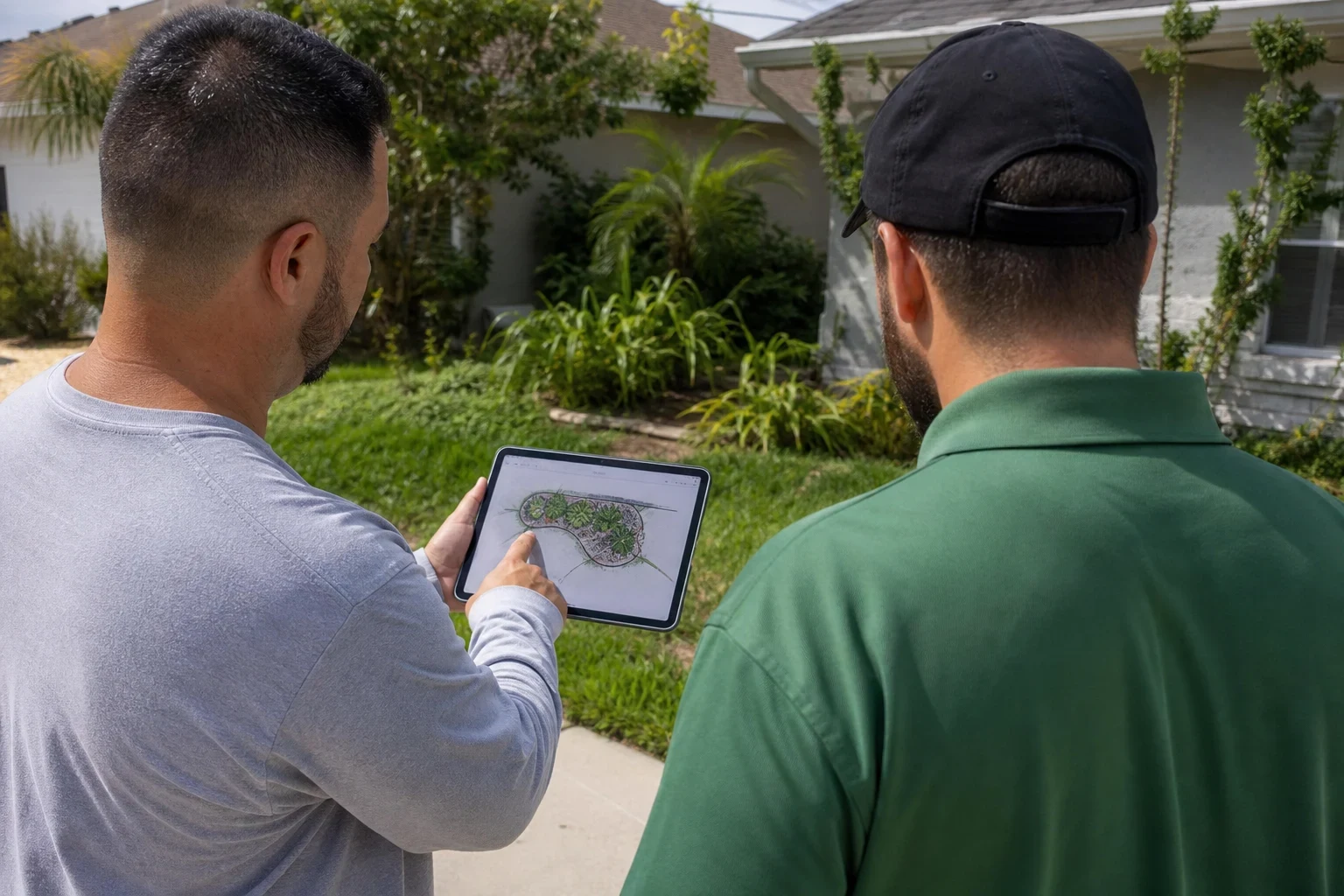
When a yard has changed, we redesign zones so turf and planting beds run separately. Beds often do better on drip line, which puts water at the soil instead of on the leaves.
Signs your sprinkler system needs attention
- Brown strips in a green lawn
- Straight brown lines or arcs usually trace a head that is blocked, misaligned or not popping up fully. The grass right next to it may look fine.
- Puddles or soft ground that stays wet
- Standing water hours after a cycle points to a leaking fitting, a cracked lateral line or a valve that weeps between cycles.
- A higher water bill with no change in use
- A valve that does not fully close can drain water all day without you seeing it run. Some leaks only show up on the meter.
- Fog instead of droplets
- Heads that mist are running at too much pressure. Most of that fine spray blows off or evaporates before it reaches the grass.
- Water on the house, fence or pavement
- Overspray wastes water, stains siding and pavers, and can keep wood wet enough to rot. It is usually a nozzle or arc adjustment.
- Fungus and dollarweed spreading
- Both thrive on overwatering. The fix is often a shorter schedule, not a stronger treatment.
How an irrigation visit runs
- 1
Walkthrough and zone test
We meet you at your home, find the controller and backflow device, and run each zone while you watch with us. You see the same problems we see.
- 2
Written findings and options
We list each issue by zone with what it needs and why. If a repair makes more sense than a rebuild, we say so plainly.
- 3
Repair or installation day
We flag lines before digging, cut turf neatly so it can go back down, and flush lines before setting new heads so sand does not clog them on day one.
- 4
Programming and final run
We set the controller for your watering days and seasons, test the rain sensor, and run every zone again to confirm coverage. We show you how to pause the system and where the shutoff is.
What moves the cost of irrigation work
Small repairs depend mostly on how many parts fail and how hard they are to reach. Larger work depends on the size of the yard and how much the layout has to change. The walkthrough and estimate are free, and the estimate lists each item so you can see where the cost comes from. If a full rebuild or new system is more than you want to pay at once, you can spread it out: we can finance amounts as high as $100,000, with terms anywhere from two to twelve years and no penalty for paying the balance off early.
- Number of zones and heads
- More zones mean more valves, wire runs and heads to test, adjust or replace.
- Finding the problem
- A visible broken head is quick. A buried leak under a driveway edge or a wire fault in an old splice takes longer to locate.
- Age and type of parts
- Older systems may use discontinued valves or controllers that cannot be matched, so the right repair sometimes means updating a section.
- Turf versus drip conversion
- Converting shrub beds from spray heads to drip line adds tubing, emitters and a pressure regulator, but it often cuts water use in those beds.
- Roots and access
- Lines running under mature trees, palms or pavers take more careful digging to repair without damaging roots or hardscape.
Irrigation questions we hear often
- How often should my sprinklers run?
- Follow the watering days the water management district assigns to your address, which drop to one day a week in the cooler months. Within those days, the right run time depends on the head type and your soil. Sandy soil usually does better with a full soak on watering days than with short daily cycles. We set this for you when we program the controller.
- Do I need a rain sensor?
- Yes. Florida requires a working rain shutoff device on automatic irrigation systems. Summer storms can drop more water in an afternoon than your system puts out in a week, so a working sensor saves water and protects the lawn from rot.
- Can you fix my system or does it need to be replaced?
- Most systems can be repaired. Replacement makes sense when the pipe is failing in many places, the valves are obsolete, or the zones no longer match the yard. We show you what we found on each zone and give you an honest answer either way.
- Will the repair tear up my lawn?
- We cut sod in clean pieces, set them aside and lay them back after the repair. Most patches blend back in within a few weeks of normal watering. If a new system needs trenching, we explain the route before we start.
- Should my flower beds be on the same zone as the grass?
- Usually not. Turf and shrubs need different amounts of water, and spray heads in beds wet the leaves and mulch more than the roots. Splitting them, often with drip line in the beds, fixes both problems. If you are also rethinking the beds, our landscape design and mulch and beds work can be planned at the same time.
Get every zone working the way it should
Call and we will set a time to walk your yard, run each zone with you and explain what we find. You get a free estimate with each repair listed before any work starts.