ServicesMulch and Beds
Mulch and Bed Installation in Casselberry
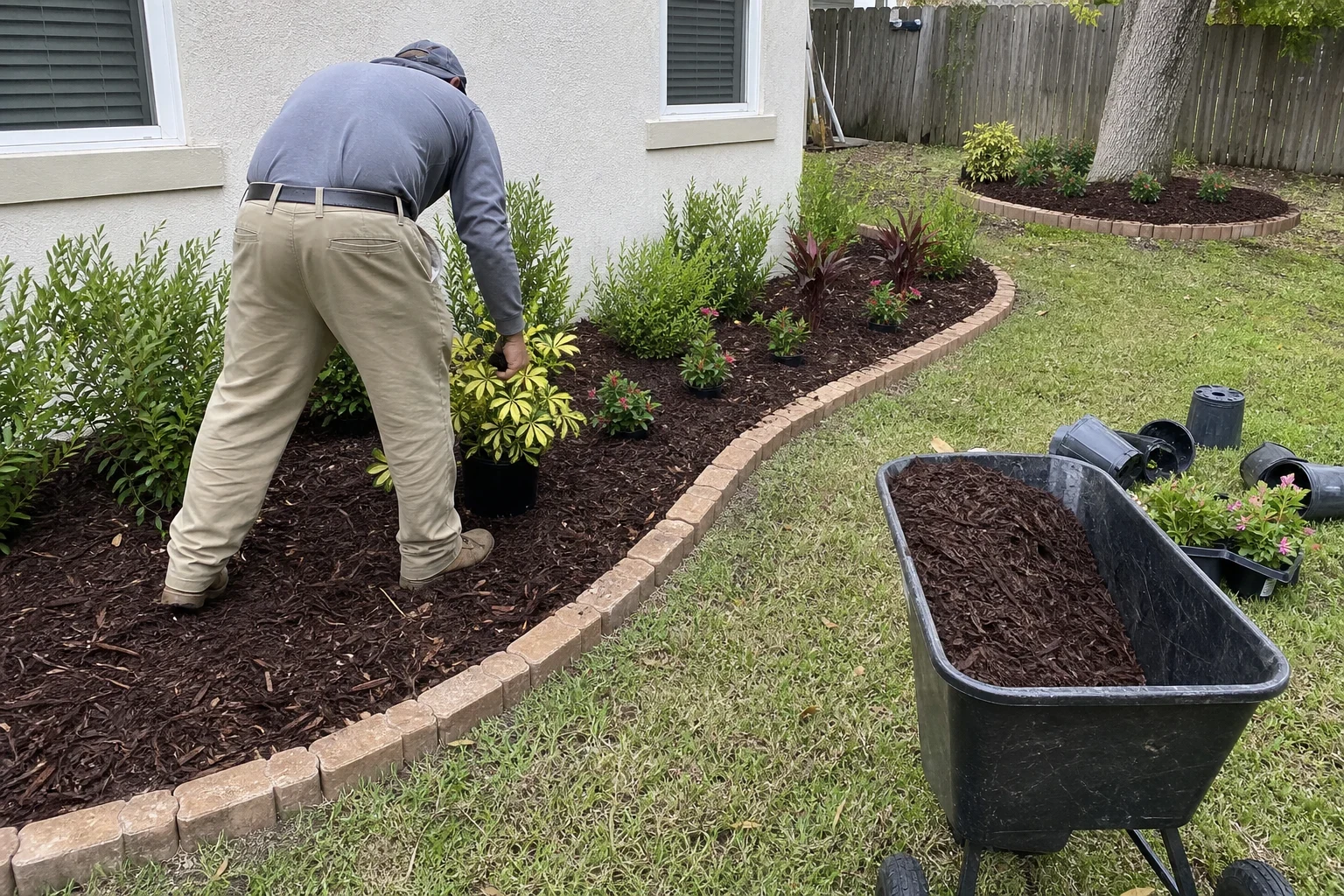
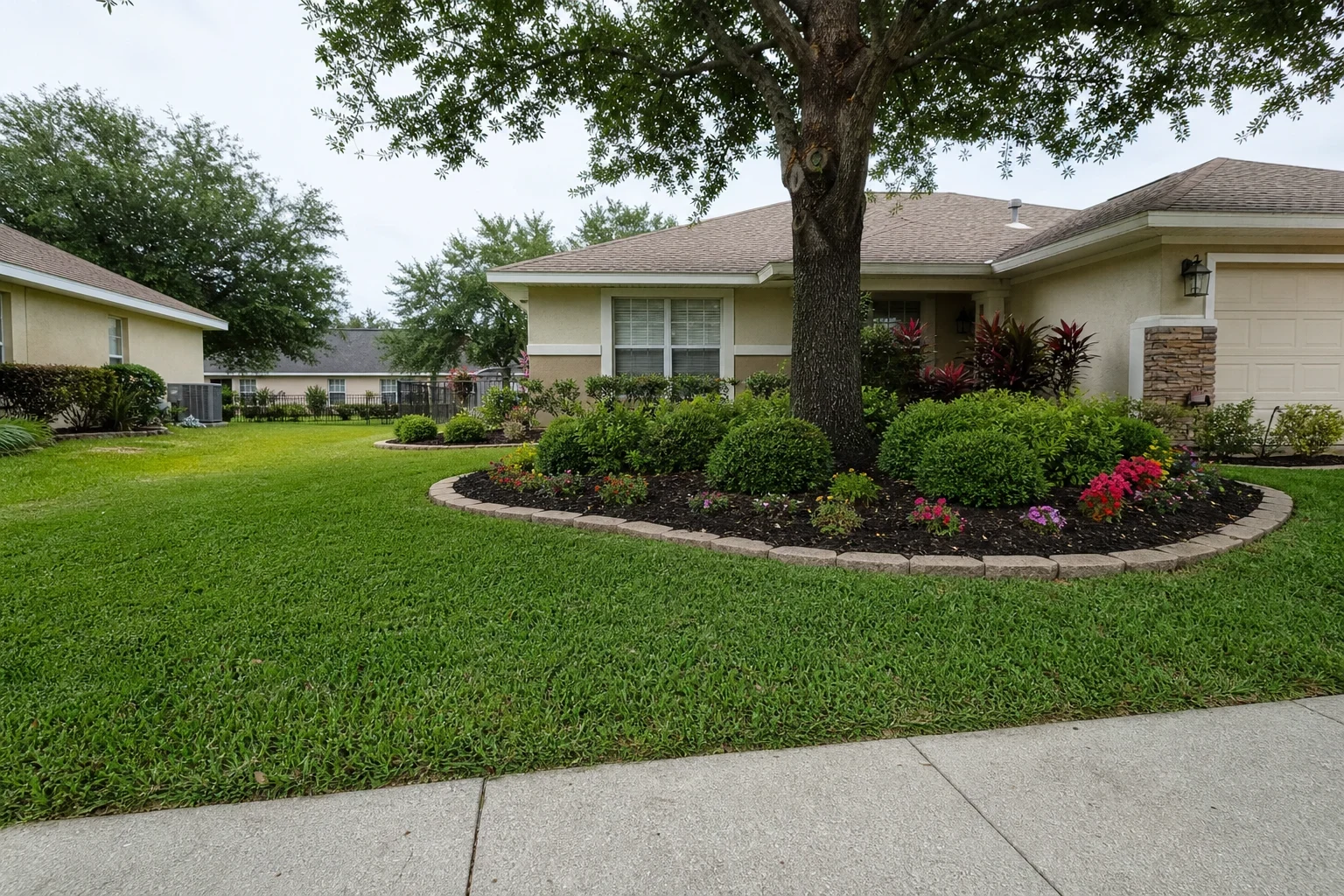
We clear out tired beds, pull weeds by the root, cut a clean edge against the lawn and lay mulch at a depth that holds moisture without smothering roots. You get beds that stay tidy through the rainy season, with a written estimate before any work starts.
What good bed work actually does
Mulch does real work. A two to three inch layer keeps sandy Florida soil from drying out between waterings, holds soil temperature steadier around roots and blocks the light that weed seeds need to sprout. Too thin and weeds push straight through. Too thick, or piled against trunks and siding, and it holds water where it causes rot and gives termites cover right next to your home.
Most beds we look at need more than a fresh top layer. Old mulch has broken down into a fine mat that sheds water, St. Augustine runners have crept in from the lawn, and the edge has disappeared. Spreading new mulch on top only buries those problems, so we fix what is underneath first.
We have been building and refreshing beds since 2018. This service is the right call when your beds look patchy, weedy or shapeless, or when you want new beds cut into the lawn. For a full redesign with new plant layouts, start with our Landscape Design page.
What our mulch and bed service includes
Old mulch and debris removal
We rake out mulch that has decomposed into a crust or packed so tight that water runs off it. Leaves, fronds and dead plant material come out with it. Where the old layer is still in decent shape, we loosen it and top it up instead of hauling it away.
Weeding to the root
We pull nutsedge, dollarweed and grass runners with the root or rhizome attached, because tops snapped off at the soil line regrow within weeks. Where it makes sense, we apply a pre-emergent to slow the next round of seedlings.
Defined edges
We cut a crisp spade edge or install edging where the bed meets the lawn. A real edge stops turf stolons from creeping into the bed and keeps mulch from washing onto the grass.
Mulch choice and depth
We talk through pine bark, cypress, eucalyptus and pine straw, and how each one behaves. Pine straw knits together and stays put on slopes, while small bark pieces can float off in a hard afternoon downpour. We spread to an even two to three inches and keep it pulled back from trunks, stems and your foundation.
Shrub and plant touch-ups
We trim back shrubs that crowd the bed and can replace plants that have died out, choosing ones suited to the sun and soil in that spot.
Sprinkler and drip check
Before mulch goes down, we look at the heads and drip lines in the bed so nothing gets buried or blocked. If we find a broken head or a leak, we note it, and our Irrigation service can handle the repair.
Signs your beds need attention
- Soil showing through the mulch
- Mulch breaks down and washes thin over a Florida summer. Bare spots dry out faster and let weed seed take hold.
- Grass growing in the beds
- St. Augustine and Bahia send runners across a missing edge. Once they root in the bed, they are much harder to pull out.
- Mulch piled against trunks or siding
- Volcano mulching around trees holds moisture against the bark and invites rot and pests. Mulch heaped against the house keeps the foundation damp and hides termite activity.
- Water sheets off instead of soaking in
- Old mulch can mat into a layer that repels water. Plants underneath stay dry even when the sprinklers run on schedule.
- Mushrooms or slime mold keep appearing
- These are usually harmless, but they point to mulch that stays wet and is breaking down fast. Often the layer is too deep or the bed drains poorly.
How a bed job runs
- 1
Walkthrough and written estimate
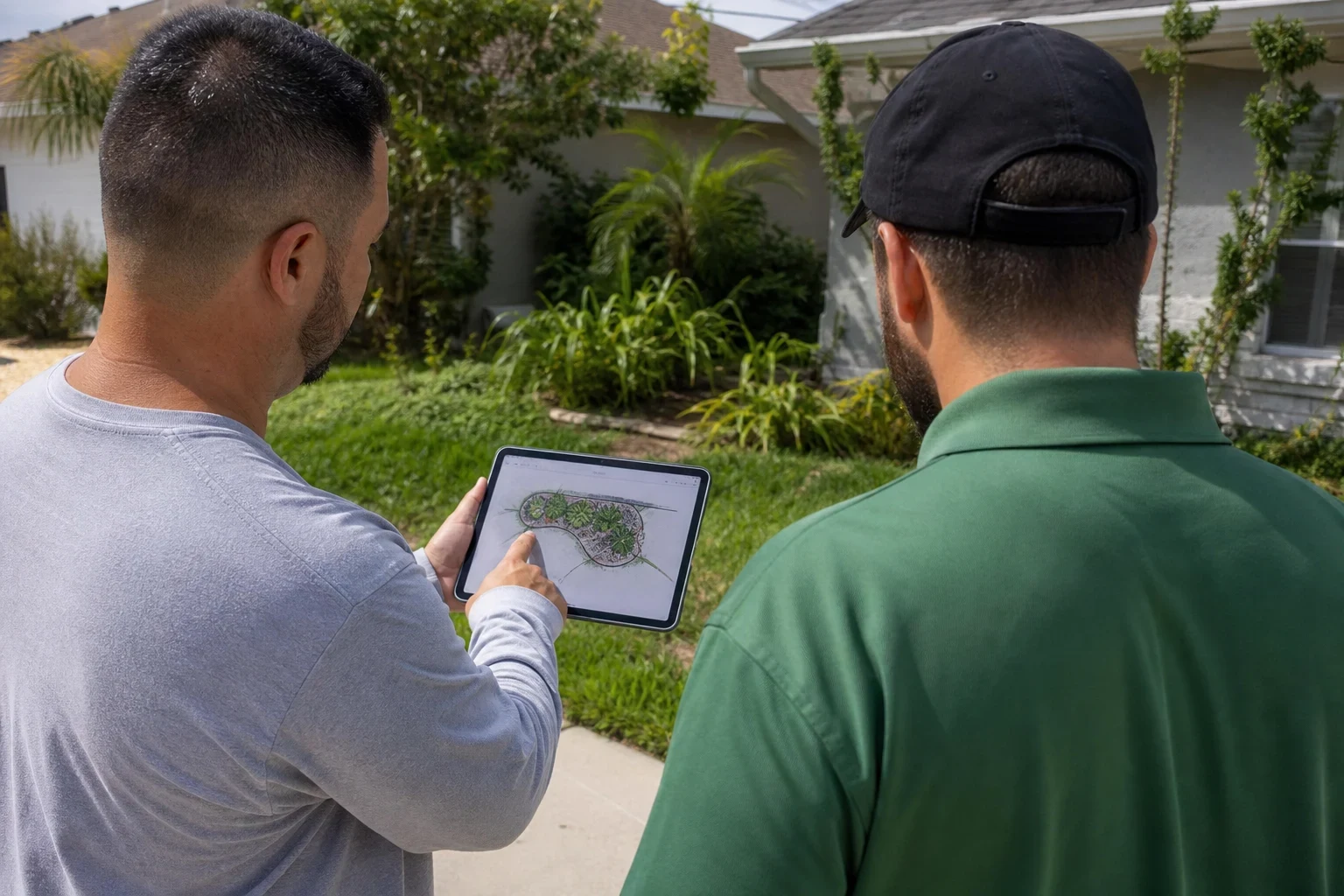
We walk the beds with you, measure them, check edges and drainage, and talk through mulch types. You get a line-item estimate covering removal, materials and labor before anything is scheduled.
- 2
Prep and cleanup
On the day, we clear debris, pull weeds and remove or loosen the old mulch. We trim shrubs and flag sprinkler heads and drip lines so they stay visible.
- 3
Edging and grading
We cut or reset the edge and grade the soil so it slopes slightly away from your home. That keeps rainwater moving away from the slab instead of pooling against it.
- 4
Mulch and final pass
We spread mulch to an even depth, pull it back from stems and the foundation, then blow the walks and driveway clean. Before we leave, we walk the finished beds with you.
What moves the price
Bed work is priced by the job, because two beds of the same size can need very different amounts of prep. We measure on site and list each part of the job separately so you can see where the cost goes. When bed work is part of a bigger project, you can spread the cost out: we finance amounts as high as $100,000, with terms anywhere from 2 to 12 years, and paying the balance off early carries no penalty.
- Bed area and depth
- Total square footage and how deep the mulch needs to go set the material quantity. Beds that have thinned to bare soil take more than a simple top-up.
- Removing old material
- Hauling out decomposed mulch, rock or failed landscape fabric adds labor and disposal. When the old layer can stay and be refreshed, the job costs less.
- Weed and grass pressure
- A bed overrun with nutsedge or turf runners takes far more time than one with scattered weeds.
- Mulch type
- Pine straw, pine bark, cypress and eucalyptus are priced differently and cover different areas per bale or bag.
- Access and edging
- Narrow side yards, beds behind fences and new edging material all add labor.
Mulch and bed questions
- How often should mulch be refreshed?
- In our climate, organic mulch usually needs a top-up about once a year, sometimes twice in beds that take heavy runoff. Pine straw breaks down faster than bark. We check the depth during the walkthrough and add only what the bed needs, rather than piling fresh mulch on every year.
- Does wood mulch attract termites?
- Mulch does not draw termites in from far away, but a damp layer touching your home gives them moisture and cover. We keep mulch pulled back from the foundation and siding, which also leaves the slab edge visible for a pest inspector. If you prefer, we can leave a strip of rock or bare soil right against the house.
- Should landscape fabric go under the mulch?
- Usually not. Under organic mulch, weeds end up rooting in the mulch on top of the fabric, and the fabric keeps the mulch from feeding the soil as it breaks down. It can make sense under rock in some spots, and we will tell you where it fits.
- Will the mulch wash away in summer storms?
- Lighter mulches can float in heavy afternoon rain, especially under roof drip lines and on slopes. A defined edge, pine straw or a heavier mulch in problem spots, and grading that steers water along the right path all help. We point out those spots during the walkthrough.
- Can you add new beds or reshape the ones I have?
- Yes. We can cut new beds into the lawn, strip the sod and reshape curves so mowing is easier. If you want a full plan with new plantings, our Landscape Design service is the better place to start.
Get your beds in shape before the next rainy season
Tell us what your beds look like now, and we will come out, walk them with you and give you a free written estimate. There is no pressure to book anything on the spot.