ServicesSod Installation
Sod Installation in Casselberry
We replace thin, weedy or bug-damaged lawns with fresh sod laid on a cleared, graded base. You get the right grass for each part of your yard, tight seams, a watering plan for the first weeks and a lawn that roots instead of browning out.
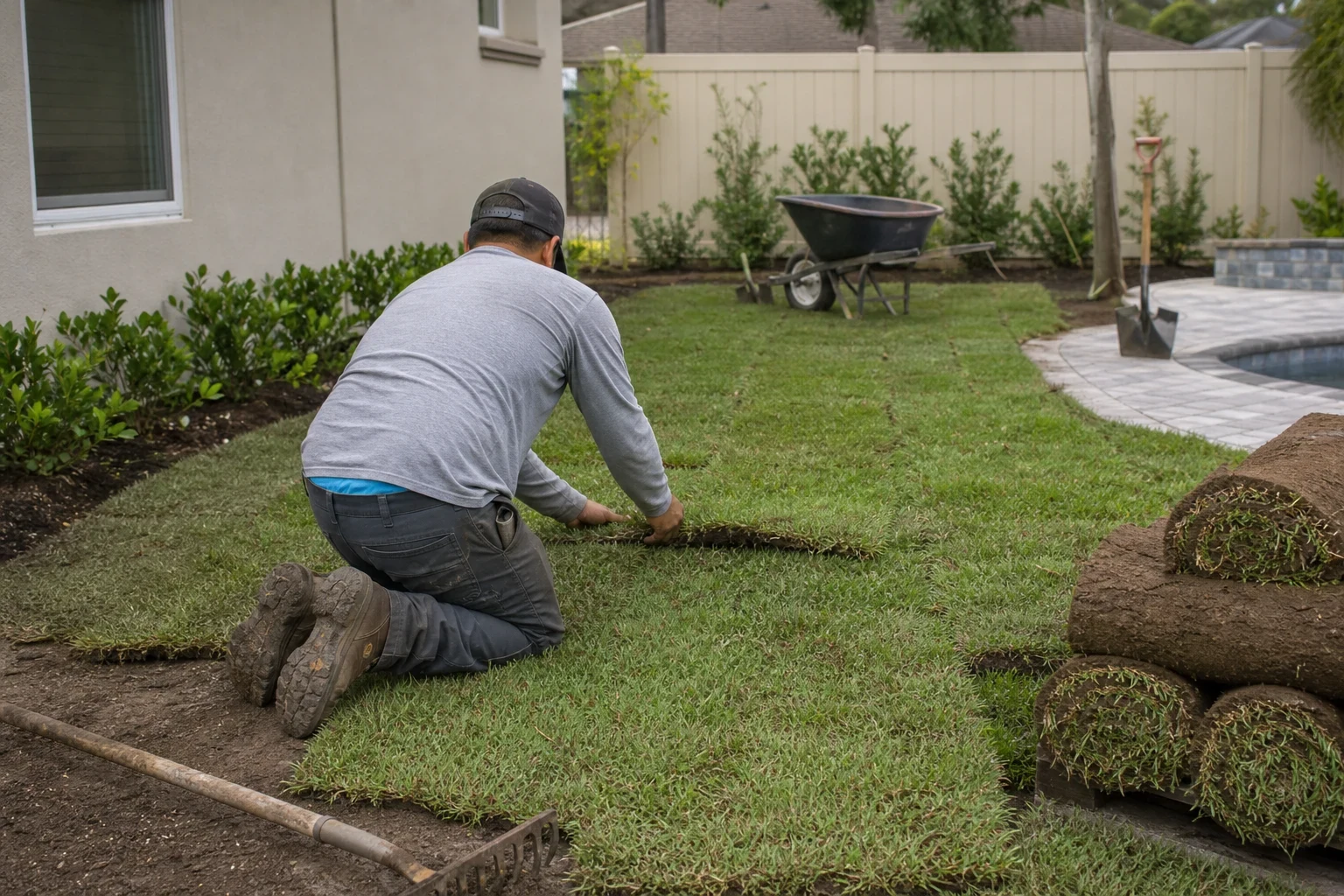
When New Sod Is the Right Call
Fertilizer and spot treatment can bring back a lawn that is stressed. They cannot bring back one where the runners are dead across large patches, or where weeds and torpedograss have taken over. At that point, stripping the old turf and laying new sod is faster and more predictable than trying to grow grass back in.
The grass type matters as much as the install. Floratam St. Augustine handles full sun but thins out under oaks. Shade-tolerant St. Augustine cultivars and some zoysias hold up better there, and bahia suits large, low-input areas. Our sandy Central Florida soil drains fast and holds few nutrients, so we look at sun, shade, drainage and how your sprinklers cover the yard before we recommend a variety.
We have been doing this work since 2018, and most failed sod we see came down to skipped prep, not bad grass.
What Our Sod Installation Includes
Old turf and weed removal
We cut out the existing lawn with a sod cutter or treat and remove it, so old roots and weeds do not push up through the new grass. Debris is hauled off, not buried.
Grading and soil prep
We loosen the top few inches, build up low spots and pitch the grade away from your home's foundation. Where the sand is bare and lifeless, we can work in a topsoil blend to give new roots something to hold.
Grass matched to the spot
Sunny front yards and shaded backyards often need different varieties. We explain the tradeoffs in shade tolerance, wear, water needs and pest pressure before you choose.
Tight, staggered laying
Pieces go down in a brick pattern with edges butted tight and cut clean around beds, walks and sprinkler heads. Gaps dry out first and invite weeds, so we do not leave them.
Rolling and first watering
We roll the sod to press roots into the soil and remove air pockets, then give it a deep first soak the same day.
Sprinkler check
We run each zone to confirm coverage on the new lawn. If heads are broken, buried or spraying the driveway, we point it out, and our irrigation service can fix it.
Signs Your Lawn Needs New Sod
- Large dead patches that do not recover
- Brown areas that stay brown after a few weeks of good watering usually mean the runners are gone. Chinch bug damage in St. Augustine often shows up this way in hot, dry stretches.
- More weeds than grass
- Once dollarweed, crabgrass or sedge cover most of an area, herbicides alone leave bare ground behind.
- Thin turf under trees
- Grass that was fine years ago may now sit in heavy shade as oaks matured. A shade-tolerant variety or a bed may be the better answer.
- Bare spots after construction
- Drainage work, a new patio or removed trees can leave raw sand. Grass rarely spreads back over it before summer rains start washing it away.
- Soft, spongy turf that lifts
- If the grass pulls up like a rug, roots may be rotting from fungus or grubs. We look at what caused it before laying anything new.
How a Sod Job Runs
- 1
Walkthrough and measurement
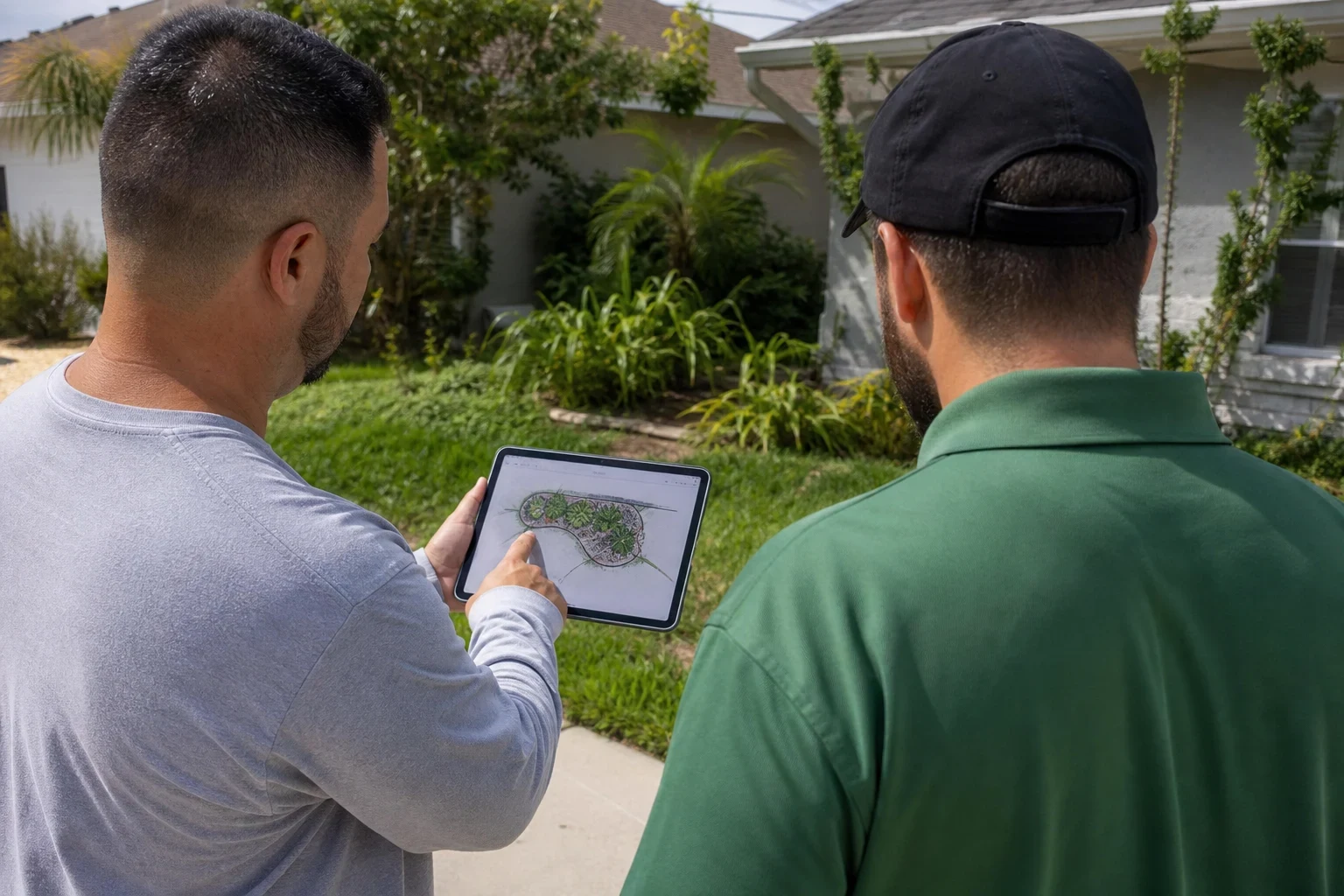
We walk the yard with you, measure the area, check sun and shade, and look at the soil and sprinkler coverage. You get a written estimate with the grass variety and prep steps listed.
- 2
Prep day
Old turf comes out, the grade is corrected and the soil is loosened and leveled. On smaller yards, prep and install can happen the same day.
- 3
Install day
Sod is delivered fresh and laid the day it arrives, because pallets heat up and yellow quickly in our weather. We cut around obstacles, roll the lawn and water it in.
- 4
Cleanup and watering plan
We blow off walks and driveways and remove leftover pieces and old turf. You get a written watering schedule for the rooting period and a note on when the first mowing should happen.
What Moves the Cost of New Sod
Sod is priced by the area covered, but the prep often weighs as much as the grass itself. Our estimate puts each step on its own line so you can see where the money goes. For a bigger project, we offer financing up to $100,000 with terms from 2 to 12 years, and you can pay it off early without a penalty.
- Square footage
- Larger areas cost more in total, though delivery and setup are spread across more ground.
- Grass variety
- Bahia generally costs less per pallet than St. Augustine, and zoysia cultivars often cost more.
- Removal and grading
- Heavy weeds, thick old turf, ruts or poor drainage add labor and hauling. A flat yard with dead grass is simpler.
- Access
- Narrow side gates, fenced backyards and slopes mean more carrying by hand instead of moving pallets by machine.
- Soil amendment and sprinkler fixes
- Adding topsoil or repairing irrigation before install adds to the job but protects the new lawn.
Sod Installation Questions
- What is the best time of year to lay sod here?
- Warm-season grasses root fastest from spring through early fall when soil is warm. Summer installs work well because rain helps, though the first two weeks need close attention. Winter sod can go down, but it roots slowly until temperatures rise.
- How often should I water new sod?
- For about the first two weeks, short waterings once or twice a day keep the sod and the soil just beneath it moist. After that we taper to fewer, deeper waterings to push roots down. The water management district allows extra watering for new lawns during establishment, and we walk you through how that applies to your schedule.
- When can I mow and walk on it?
- Keep foot traffic light for the first couple of weeks. Most new sod is ready for its first mowing in two to three weeks, once you tug a corner and it holds. Set the mower high for that first cut.
- Can you lay sod over my existing grass?
- We do not. Sod laid over old turf sits on a layer of decaying thatch, roots poorly and develops uneven spots. Removing the old lawn first is what lets the new one knit into the soil.
- Which grass handles shade best?
- Some St. Augustine cultivars and certain zoysias tolerate partial shade far better than Floratam or bahia. In deep shade, no turfgrass does well, and a mulched bed may serve you better. We will tell you honestly which areas will hold grass.
Get a Lawn That Roots Into the Soil
We will measure the yard, check your soil and sprinklers and tell you which grass fits. The walkthrough and estimate are free.