ServicesSeasonal Cleanup
Seasonal Cleanup in Casselberry
We clear matted oak leaves, cut back freeze-burned plants, re-edge your beds and get the yard ready for the summer rains. You get healthier turf underneath, plants pruned at the right time, and every bag of debris hauled away before we leave.
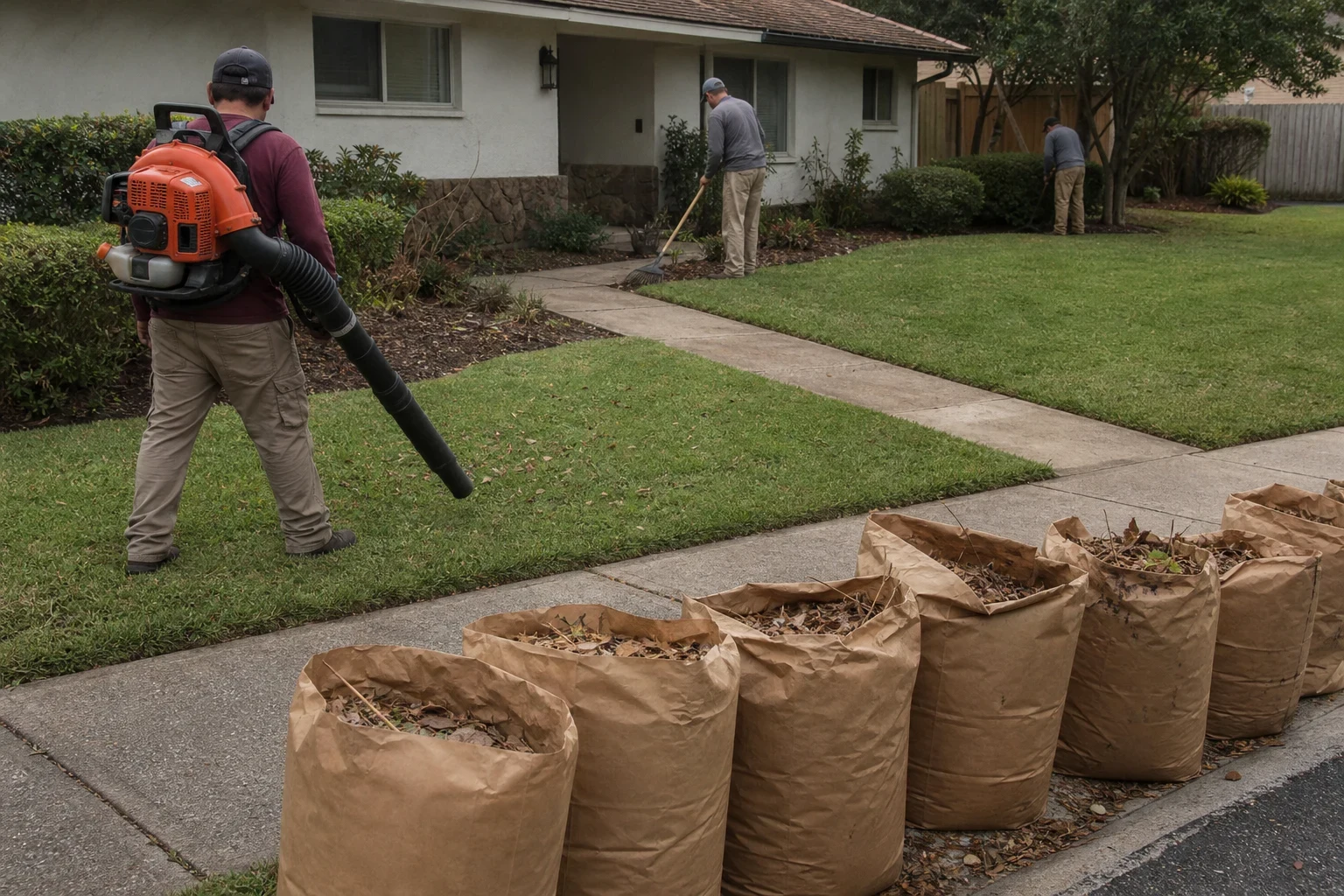
What a seasonal cleanup actually fixes
The classic autumn leaf fall mostly skips this area. Live and laurel oaks shed heavily from about February into April, the same weeks St. Augustine and Zoysia come out of winter dormancy and start pushing new blades. A wet mat of leaves blocks sunlight, holds moisture against the grass and sets up fungal problems like brown patch and gray leaf spot.
A seasonal cleanup removes that layer and resets the rest of the yard for the weather ahead. We time each task to the plant, not the calendar. Cold-damaged hibiscus and ixora get cut back after freeze risk has passed, and weak limbs come down before hurricane season opens in June.
We have been in business since 2018, and we plan cleanups around two windows: late winter after the oak drop, and late spring before the daily afternoon storms start.
What's included in the cleanup
- Leaf and debris removal
- We rake and blow leaves out of the turf, pull them from under shrubs and along foundation lines, and pick up fallen twigs, acorns and Spanish moss. Everything is bagged or loaded and hauled off your property.
- Cutting back cold damage
- Frost-burned tropicals are pruned back to live green wood. We scratch the bark to find where the tissue is still alive instead of guessing, so you don't lose more of the plant than the cold already took.
- Weeding and bed edging
- Weeds are pulled by the root, including dollarweed and nutsedge where the soil allows. We re-cut bed edges so St. Augustine runners stop creeping into the beds. If the mulch is thin, we can top it off through our Mulch and Beds service.
- Shrub and grass cutback
- Hedges get shaped, and ornamental grasses like muhly and fakahatchee are cut down before new growth pushes through the old blades.
- Storm-season prep
- We remove dead palm fronds and low, dead limbs within safe reach of the ground. Larger limbs over the roof go to our Tree Trimming and Removal crew.
- Sprinkler head check
- We run each zone to find heads buried under leaves or knocked crooked by mowers. Repairs beyond a simple reset are handled through our Irrigation service.
Signs your yard is due for a cleanup
Leaves matting on the lawn
If oak leaves have stayed on the grass for more than a couple of weeks, the turf underneath is likely yellowing from lack of light.
Brown, mushy stems after a cold night
Soft, blackened growth on tropicals means cold damage. It needs to come off, but at the right time.
Beds with no edge
When you can't tell where the lawn stops and the bed starts, grass and weeds are already rooting into the mulch.
Dead fronds and limbs before June
Hanging fronds and dead branches become projectiles in a summer storm. Spring is the time to clear them.
Weeds starting to seed
Once weeds flower, one bed can reseed the whole yard. Pulling them now saves a bigger job later.
How a cleanup day runs
- 1
Walkthrough
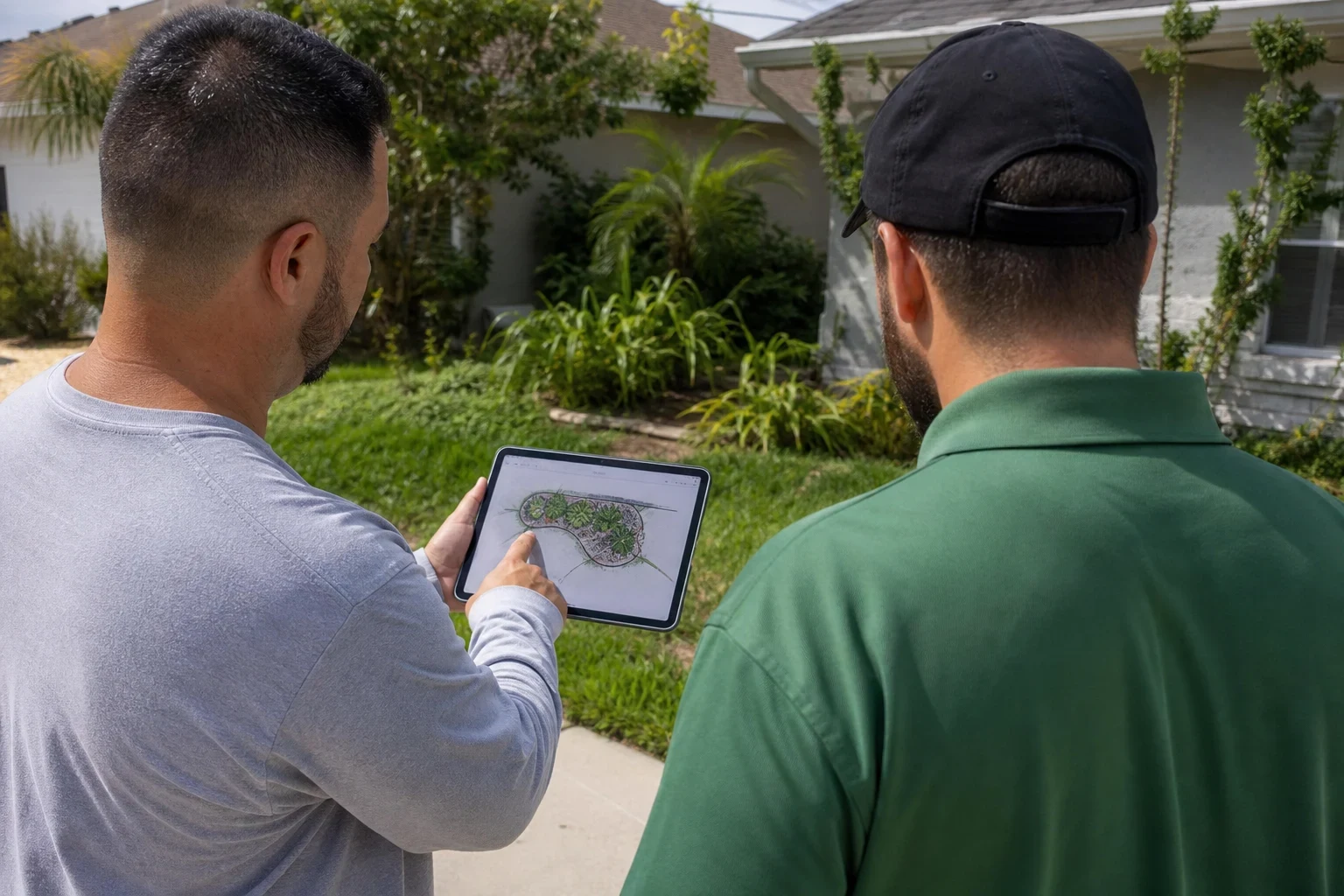
We walk the property with you, note leaf load, plant damage, bed condition and anything overhead, and tell you what can wait and what shouldn't.
- 2
Written estimate
You get a line-item estimate that separates cleanup, cutback and haul-off, so you can see where the cost sits and trim the scope if you want.
- 3
Work day
The crew works from the top down: overhead fronds and limbs first, then shrubs, then beds, then turf. That order keeps falling debris off areas we've already cleaned.
- 4
Haul-off and final look
Debris leaves with us. We blow off the driveway, walks and patio, then walk the yard once more to check nothing was missed.
What moves the price of a seasonal cleanup
Two yards of the same size can take very different amounts of work. The biggest drivers are how much material comes off the property and how long it has been since the last cleanup. We price from what we see on the walkthrough, not a flat rate.
- Leaf and debris volume
- A lot under several mature oaks produces far more material than an open yard. Disposal is a real part of the cost.
- Time since the last cleanup
- A yard skipped for a season or two has layered leaves, rooted weeds and lost edges, which takes more labor to reset.
- Amount of cutback
- A few damaged shrubs is quick work. A full foundation planting of frost-burned tropicals takes longer.
- Add-ons
- Fresh mulch, sprinkler repairs or larger tree work are priced separately so you can choose what to include.
Seasonal cleanup questions
Something not covered here? (407) 250-1431
When is the best time for a seasonal cleanup here?
Late February through March catches the oak drop and the end of freeze risk in one visit. A second pass in May clears spring debris and handles storm prep before June. Many customers do both.
Should I cut back freeze-damaged plants right away?
No. The dead tissue protects the live wood below from another cold night. We wait until freeze risk has passed, usually by early March, then prune back to healthy growth.
Do you haul away everything you remove?
Yes. Leaves, clippings, fronds and branches leave with us. You won't be left with bags at the curb waiting for yard waste pickup.
How is this different from a property cleanup?
A seasonal cleanup maintains a yard that is mostly in shape. Our Property Cleanup service is for overgrown or neglected lots that need heavy clearing first.
Will a cleanup help with brown patches in my lawn?
It often helps, because removing wet leaves lets the turf dry and get light. If the patches are fungus or chinch bugs, we'll tell you and point you to our Lawn Care service.
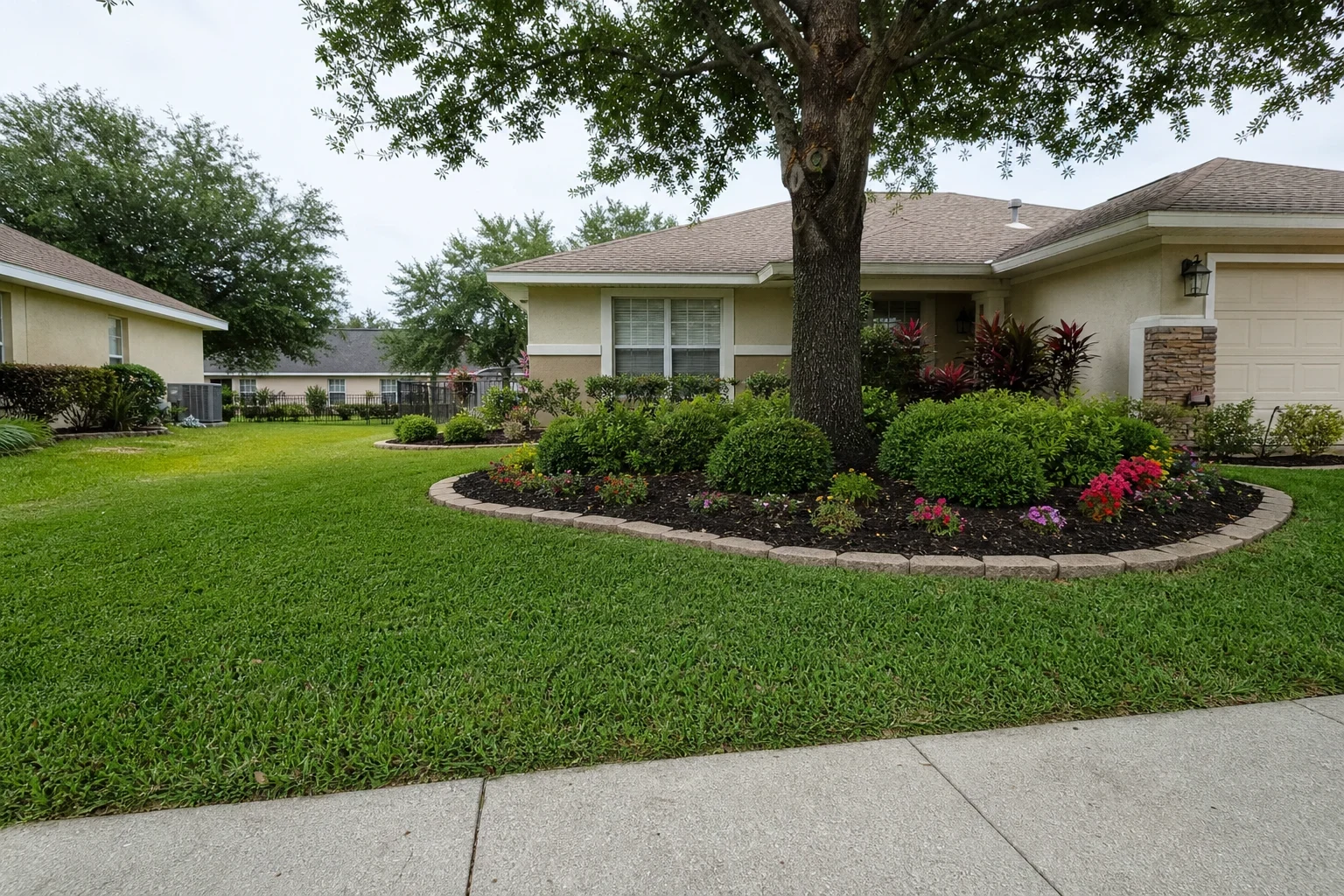
Get your yard ready for the next season
We'll walk the property, show you what needs attention now and what can wait, and give you a written estimate at no cost.